

Video: Hoop Group Skills Drill of the Week- Jump Stop/ Pivot/ Pass by Hoop Group
Dribble slowly toward the landing box, gather the ball, and place both feet inside before holding the freeze.
Check the gather and landing
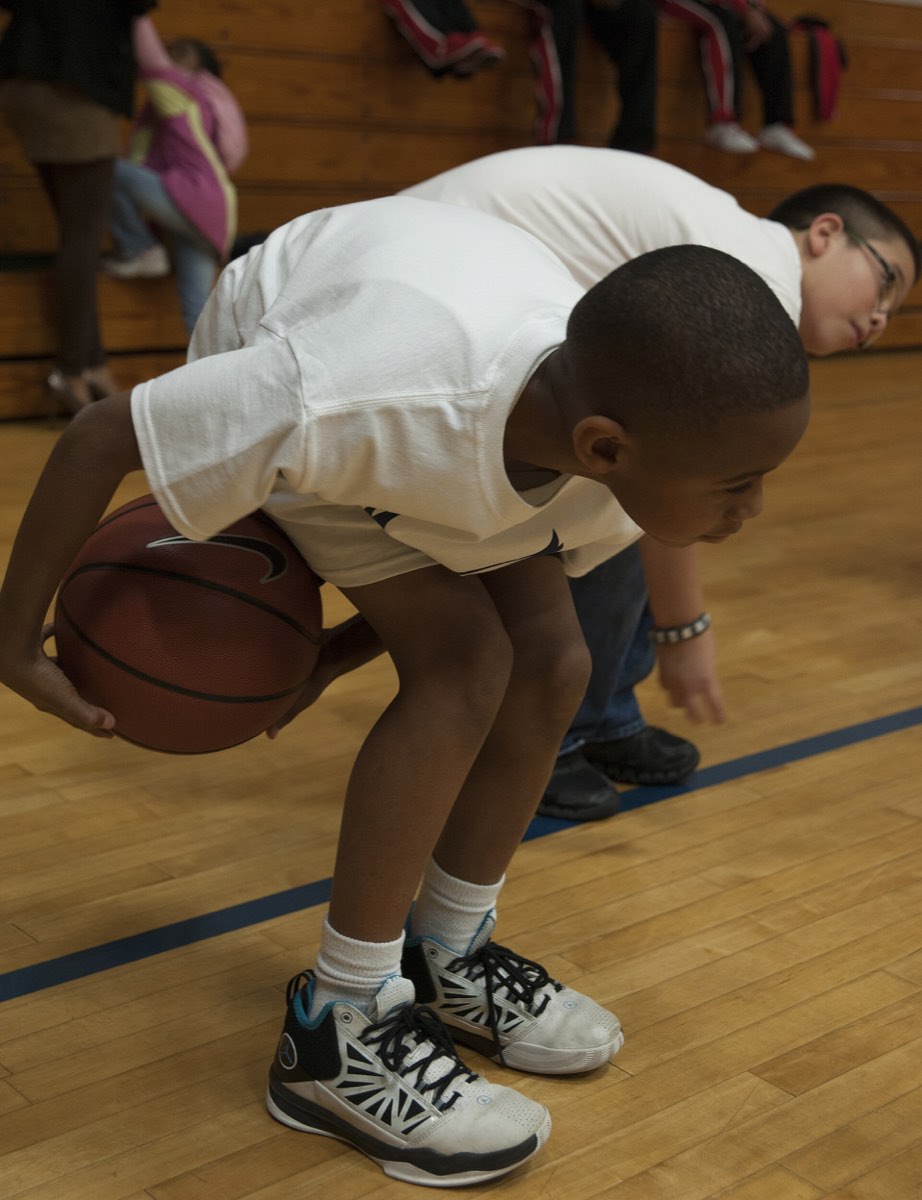
The setup view above shows the approach. These close views show the order that prevents the drill from becoming a rushed pickup and recovery step.
Bring both hands to the ball and secure it before the short hop begins. The feet are still visible under the body rather than running through the pickup.
Land with both feet inside the box at the same time. Keep the knees bent, the ball close, and the body still for a full two-count.
Setup
Mark a lane about three metres long. At the far end, use four flat markers or removable tape to make a landing box roughly 60 centimetres square. Leave another two clear steps beyond the box for a safe recovery. The child starts at the other end with the ball. Begin without a dribble if the two-foot landing is new.
What This Drill Teaches
The drill joins four actions that beginners often rush: ending the dribble, gathering the ball, landing on two feet, and deciding what happens next. The freeze makes the landing visible. A parent or coach can check balance before adding a pivot or pass instead of shouting about an extra step after the sequence has already broken down.
Learn The Landing Without The Ball
Stand one short step from the landing box. Step forward, make a small hop, and place both feet inside the box at the same time. Land with the feet around shoulder-width apart and the knees bent. Hold for two seconds. The jump should travel forward only far enough to reach the box; this is a stop, not a longest-jump contest.
Add The Ball Pickup Before The Jump
Walk the lane with one slow dribble. Gather the ball securely with both hands before leaving the floor, then make the same small two-foot landing. Keep the ball close to the chest and the eyes forward. If the ball is still bouncing or loose when the feet land, remove the approach and practise the gather from a standing bounce.
Run The Ten-Minute Routine
Minutes 0-2 are no-ball landings from one step away. Minutes 2-5 use one slow dribble, a two-hand gather, and a two-second freeze. Minutes 5-8 begin from the full three-metre lane with no more than three dribbles. Minutes 8-10 add one next action after the freeze: a chest pass to an adult, or a controlled pivot toward a called marker.
Use A Freeze That Shows The Mistake
Count 'one, two' only after both feet are down. If a foot slides, steps through, or lands outside the box, do not add a pivot. Move closer and repeat the same level. If the child falls forward, shorten the jump and ask for softer knees. If the feet land one after the other, return to the no-ball version for two repetitions.
Keep The Ball And Feet In The Right Order
Use the cue 'gather, land, freeze'. Say it before the attempt. The hands secure the ball first, both feet make the landing, and the body becomes still before the next choice. Avoid calling several corrections during the approach. Watch one feature per round: the gather, the feet, or the held balance.
Add A Pivot Or Pass Only After Balance
For a pass, show the target before the approach begins. The child freezes, sees the target, and passes without an extra shuffle. For a pivot, call left or right only after the landing is held. Keep one foot fixed while the other turns the body. Stop the progression if the landing changes simply because the child is thinking about the next action.
What This Drill Cannot Decide
A jump stop does not automatically make every game action legal. Traveling depends on when control of the ball was gained and what the feet did before and after that moment. This page teaches a repeatable stopping pattern for beginners. Use a qualified coach or the rules used by the child's competition for a specific game situation.
How A Parent Can Help
Stand beyond and slightly to the side of the landing box, outside the child's path. Give one cue before the start and one observation after the freeze. Useful notes are concrete: 'both feet were inside', 'the right foot stepped again', or 'the ball was secure before take-off'. Count clean sequences, not attempts completed at any cost.
Surface And Space Check
Use a dry, level court, driveway, or non-slip indoor floor. Flat markers are safer than raised cones in the landing area. Clear loose balls, bags, people, stairs, glass, and traffic from the recovery path. Indoors, remove the jump if the ceiling is low or the floor moves under the child's shoes.
Steps
- 0-2 minutes: step, make a small hop, land on two feet inside the box, and freeze without the ball.
- 2-5 minutes: take one slow dribble, gather with two hands, land in the box, and hold for two seconds.
- 5-8 minutes: use the full lane and no more than three controlled dribbles before the gather and stop.
- 8-10 minutes: after a clean freeze, make one chest pass or one called pivot before resetting.
- After every attempt: check the gather, both feet, and balance before increasing the distance or adding speed.
Coaching points
- Secure the ball with two hands before the feet leave the floor.
- Land both feet at the same time, around shoulder-width apart.
- Bend the knees and keep the chest over the landing rather than falling forward.
- Hold the freeze for two seconds before passing, pivoting, or restarting.
- Keep the ball close to the chest while the feet settle.
- Change only one demand at a time: approach distance, dribble count, pivot, or pass.
Common mistakes
- Picking up the ball after the landing instead of gathering before take-off.
- Landing one foot before the other when practising a two-foot jump stop.
- Putting the feet so close together that the body sways or steps again.
- Jumping too far and falling out of the front of the box.
- Starting the pivot or pass before the two-second freeze is complete.
- Adding speed after an untidy repetition instead of shortening the approach.
Make it easier
Hold the ball, start one step from a wider landing box, and practise only the small hop, two-foot landing, and two-second freeze. Remove the pass, pivot, and dribble.
Make it harder
Use the full lane, then call a left pivot, right pivot, or chest pass after the child has frozen. Later, begin with a gentle pass so the sequence becomes catch, jump stop, freeze, and pass back.
How to know it is working
The drill is working when the child completes two rounds of five approaches with the ball secured before take-off, both feet landing inside the box together, and no recovery step during the two-second freeze.
Safety
Use a dry, level, non-slip surface and flat landing markers. Leave two clear recovery steps beyond the box. Keep the jump short and quiet. Stop if the child slips, lands with pain, repeatedly loses balance, or reports discomfort in the feet, ankles, knees, hips, or back.
Common questions
How do you teach a basketball jump stop to a child?
Begin without a ball from one step away. Ask for a small hop, both feet landing together in a wide box, bent knees, and a two-second freeze. Add one slow dribble and a two-hand gather only when that landing is balanced.
Does a jump stop always prevent traveling?
No. It provides a clear stopping pattern to practise, but a game ruling also depends on when the player gained control and what the feet did before and after the stop.
Should a child jump high during a jump stop?
No. Use a small forward hop that lets both feet land together under the body. Extra height or distance usually makes the landing harder to control.
What should happen after the jump stop?
A beginner should freeze first. Once balanced, the player can pass, shoot, or use an allowed pivot. Practise only one next action at a time.