
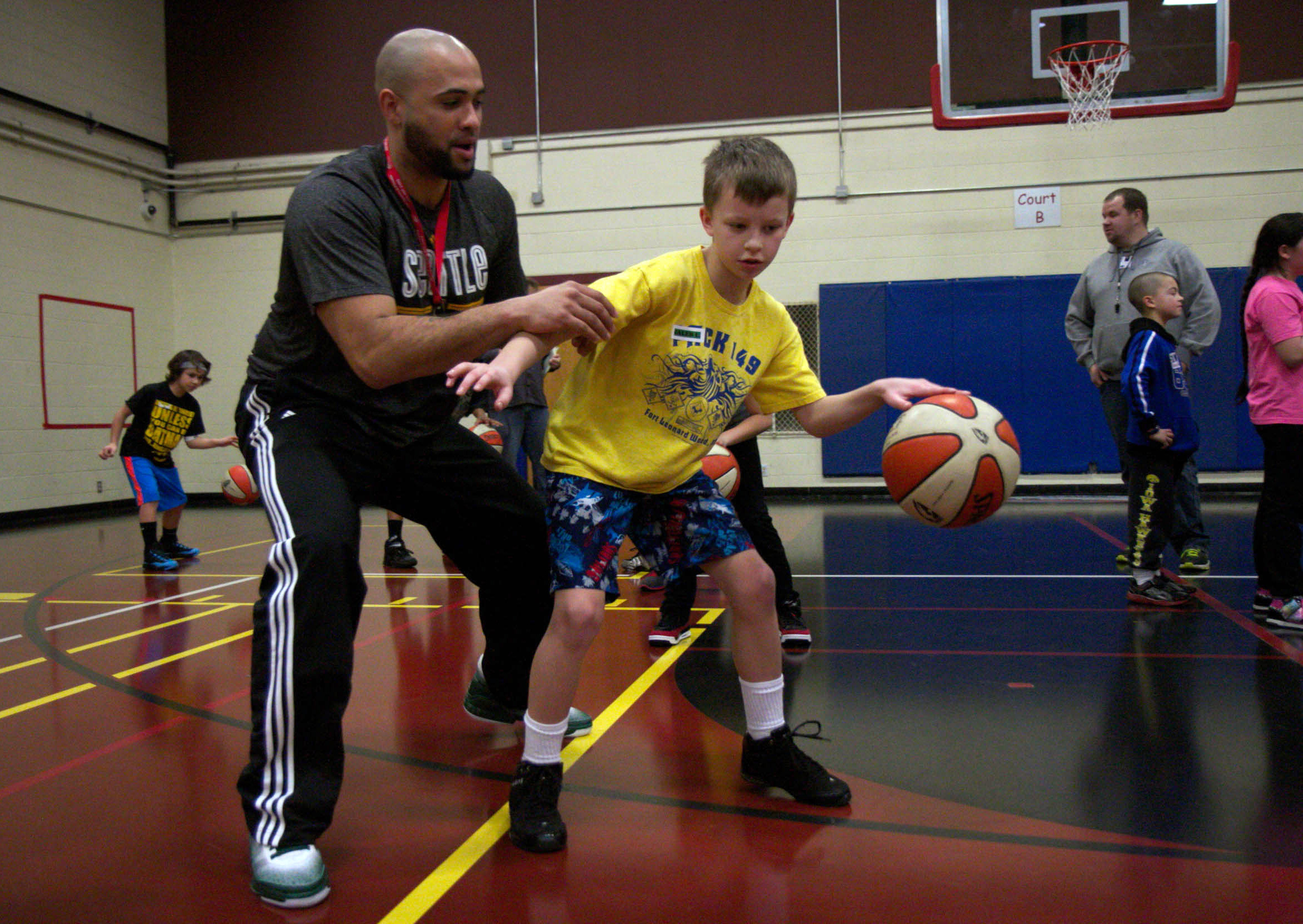

Why Control Comes Before Speed
A seven- or eight-year-old who loses the ball will often try to solve the problem by hitting it harder or running faster. That usually makes the next bounce less predictable. The useful first win is quieter: the ball returns beside the same hip, the child can gather it without a chase, and both feet are still under the body. Once that pattern feels familiar, speed has something stable to build on.
The Weaker Hand Should Not Feel Like A Punishment
The weaker hand needs regular contact with the ball, but it does not need five straight minutes of failure. This session uses short weaker-hand rounds, a brief return to the dominant hand, and a simpler stationary version when the ball escapes. That gives the child a rhythm to compare without suggesting that one hand is good and the other is a problem.
Careful Supervision Means Changing The Task
An adult's most useful job is to watch the bounce path, the child's balance, and the space around the drill. Give one cue before the next attempt, then let the child try it. If the ball hits a shoe, rises above the waist, or rolls away twice, change the distance or number of bounces instead of repeating the same correction more loudly. Stop when tired feet or frustration make control worse.
Before you start
Place two flat markers four to five adult paces apart. Leave clear space beyond both markers so a loose ball does not reach traffic, steps, glass, or another activity. The child starts beside the first marker with the ball next to the hip. This is a short skill block, not a complete team practice: keep the clock moving, use the listed rests, and stop early if control disappears.
Session goals
- Keep a repeatable dribble beside the body without chasing the ball.
- Use the weaker hand for short, manageable moving repetitions.
- Gather the ball and land on two feet without an extra step.
Run this 15-minute session
Build a repeatable stationary bounce before the feet start moving.
Keep both feet visible and planted just wider than the shoulders. Bounce beside one hip, then gather with two hands and freeze without shifting the feet.
Run it like this
- Use the first 30 seconds to find a balanced stance: feet just wider than the shoulders, knees bent, ball beside the hip.
- Work for 20 seconds with the right hand, freeze the ball, then rest for 10 seconds. Repeat once.
- Use the same two 20-second rounds with the left or weaker hand.
- For 90 seconds, make five controlled bounces on one side, freeze, move the ball across, and make five on the other side.
- Use the final minute for the weaker hand. Pause after any loose bounce, rebuild the stance, and restart.
Coaching cues
- Say 'push, do not slap' if the hand lands flat on top of the ball.
- The ball should return beside the hip, not across the toes.
- Count a clean freeze as part of the repetition; it shows whether the child still has balance.
Keep the weaker-hand dribble controlled while the child walks the marked lane.
Keep both feet visible as the child walks the lane. The ball stays outside the near foot and beside the body.
Run it like this
- For two minutes, walk from marker to marker using only the weaker hand. Stop, hold the ball, turn, and reset before each return.
- Use the dominant hand for one minute at the same walking speed. Notice the rhythm, then switch back.
- For the final two minutes, use the weaker hand and ask for one quick glance at the far marker during each trip.
- If the ball rolls away twice in one trip, shorten the lane to three paces instead of asking the child to hurry.
Coaching cues
- Walk slowly enough that the hand, ball, and feet keep the same rhythm.
- Keep the ball outside the near foot rather than crossing it in front of the body.
- Ask for a quick glance, not permanent eyes-up dribbling before control is ready.
Turn the moving dribble into a controlled two-foot stop.
Dribble slowly toward the landing box, gather the ball, and place both feet inside before holding the freeze.
Run it like this
- For one minute, rehearse without dribbling: take two walking steps, make a small jump, and land on two feet behind the far marker.
- For two minutes, dribble slowly toward the marker, gather the ball, land on two feet, and freeze for two seconds.
- Use the final minute to add one next action after the freeze: a pivot, a chest pass to the adult, or a careful restart.
- Move the marker closer if the child needs a long leap or lands with the feet crossing.
Coaching cues
- Use 'gather, two feet, freeze' as the whole cue.
- Look for a quiet landing with bent knees and the chest up.
- Do not add speed until the child can hold the landing without another step.
Finish
For the final minute, complete five right-hand bounces, five weaker-hand bounces, one walk to the marker, and one balanced jump stop. After a loose bounce, retrieve the ball and begin the sequence again without adding make-up repetitions. Finish on one controlled attempt, even if it arrives before the minute ends, and name the action that improved: a lower bounce, a calmer walk, or a still landing.
What success looks like
The child does not need a perfect round. Look for a bounce that stays beside the body more often than it escapes, a short weaker-hand walk that can be stopped under control, and a two-foot landing held for two seconds. Those three signs are enough to repeat this session another day.
Choose The First Adjustment From What You See
| What happens | Keep | Change one thing |
|---|---|---|
| The bounce keeps hitting a shoe | Stationary dribbling | Move the ball beside the hip and widen the stance. |
| The ball rises above the waist | Stationary dribbling | Use a softer push and lower the stance. |
| The weaker hand loses the ball twice | Walking with the weaker hand | Shorten the lane or use five bounces and a freeze. |
| The eyes stay down for every bounce | The same slow walking pace | Ask for one quick glance after control is settled. |
| An extra step follows the gather | The jump-stop finish | Rehearse without a dribble or move the marker closer. |
Make it easier
Keep the first ten minutes stationary: use five bounces, freeze, then switch hands. For the stop, carry the ball through two walking steps before the two-foot landing. A smaller or lighter age-appropriate ball can also make the first contacts easier to control.
Make it harder
Keep the same time and add one decision: call 'right' or 'left' before the walking turn, or ask for a pivot direction after the jump stop. Do not add all changes at once.
Safety
Use a dry, level, non-slip surface and flat markers that will not catch a shoe. Check the run-off area before starting. Stop if the child reports pain, becomes dizzy, or can no longer control the landing.
Why Fifteen Minutes Is Enough For This Job
This is a focused home skill block, not a complete organised team practice. The NBA and USA Basketball youth guidelines recommend longer organised practices for ages seven to eight, while also distinguishing unstructured individual practice. Here, fifteen minutes is enough time to work on one bounce pattern, one moving pattern, and one controlled stop without turning the activity into an endurance test.
Do Not Turn The Finish Into A Test
The last sequence is a chance to connect the three parts of the session, not a pass-or-fail exam. Do not restart the clock, demand ten perfect repetitions, or compare siblings and teammates. If the child can make one calmer attempt and explain which part felt easier, the session has done its job. Leave the next challenge for another day.
Common questions
Can this session work without a basketball court?
Yes. A clear driveway, playground area, or suitable indoor hard floor is enough. You need a predictable bounce and a lane about four to five adult paces long, not a hoop or full court.
What if the child cannot use the left hand yet?
Replace the walking section with five stationary weaker-hand bounces followed by a freeze. When that is repeatable, add one step, then three paces. Do not remove weaker-hand work completely.
Is 15 minutes a full U8 basketball practice?
No. This is one focused ball-handling block for home practice or part of a longer team session. The NBA and USA Basketball youth guidelines list longer practice ranges for ages 7-8.
How high should the ball bounce?
Use the hip or waist as a practical ceiling for these beginner repetitions. The exact height matters less than a repeatable bounce that returns beside the body and can be gathered without a chase.
What should the adult say during the session?
Use one cue before the next attempt, such as 'beside your hip' or 'gather, two feet, freeze.' Then watch the repetition. If the same problem continues, make the task shorter or slower rather than adding more words.