
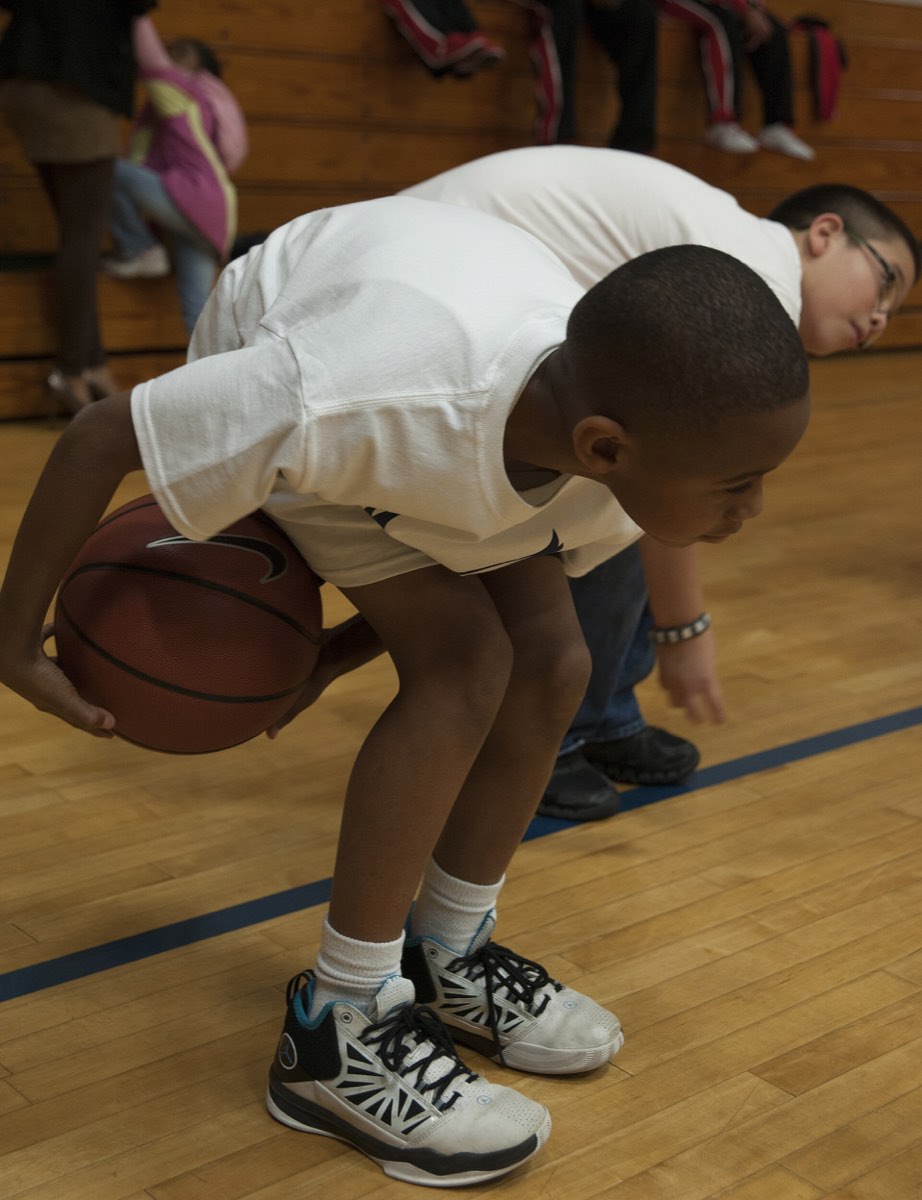

Start With The Problem You Can See
A useful basketball drill solves one problem at a time. Watch five ordinary repetitions before changing anything. If the ball escapes while the feet stay still, begin with stationary control. If catches pull the child off balance, use short chest passes. If extra steps appear after the dribble ends, practise the gather and stop. Choose from that evidence rather than picking the busiest-looking drill.
Keep The First Version Simple
For a beginner, control comes before speed. Use one ball, a dry level surface, and enough clear space for an awkward bounce. Explain one action, let the child try it, then give one short observation. USA Basketball's foundational curriculum separates ball handling, passing, shooting, and footwork into skills that can be built progressively; the routine below samples three of those areas without pretending to be a complete team practice.
Run This 12-Minute Beginner Basketball Practice
Use this practice when one child has a ball and an adult can provide a target or check the setup. The first block finds a repeatable bounce, the second joins a step to a chest pass, and the third finishes with a controlled gather and two-foot stop. Stay on an easier block when the ball or feet are still escaping.
Set up before the first ball
Mark one starting spot and a second marker about three adult paces away. If a solid wall is available, place a removable target at the child's chest height and begin about 1.5 metres away. Leave two clear paces around the lane and rebound path. Do not use glass, a door, loose brickwork, a vehicle area, stairs, or a wet or slippery surface.
Run the routine
Five bounces, gather, freeze
Set both feet a little wider than the shoulders. Make three test bounces beside the right hip. Then complete sets of five bounces, gather with two hands, and freeze for two seconds. Repeat on the left. If the child chases the ball twice, shorten the next set to three and lower the bounce.
Step, pass, catch, reset
Face a safe wall target or an adult partner. Step toward the target as both hands push the ball from chest height. Allow one bounce on the return at first. Catch with two hands, put both feet under the body, and pause. Use four sets of five passes, changing the lead foot after each set.
Gather, land, hold
Begin one step from the far marker without dribbling. Make a small hop, land on both feet, and hold for two seconds. Then start three paces away, use one or two slow dribbles, gather with two hands before leaving the floor, and repeat. Add a pass only after the landing stays still.
What success looks like
- The bounce returns beside the same hip and ends in a two-hand gather without a chase.
- The child can step toward the target, pass from chest height, and regain balance before the next pass.
- The final gather happens before take-off and the child can hold the two-foot landing for two seconds.
Make it easier
Use three dribbles instead of five, move closer for the pass, and practise the landing while holding the ball. Remove movement before changing the ball, target, or scoring rule.
Make it harder
Add one brief eyes-up signal during the dribble, catch the wall return without a bounce, or call a pivot direction after a clean jump-stop freeze. Add only one change in a round.
Safety check
Check the ball, wall, floor, and recovery area before starting. Use a ball the child can control without straining. Stop if the surface becomes wet, rebounds reach the face, tired repetitions leave the clear area, or the child reports pain, dizziness, or feeling unwell.
Which Basketball Drill Should You Choose?
| What you see | Start with | First adjustment |
|---|---|---|
| The ball hits a shoe or rises above the waist | Pound Dribble Holds | Use three stationary bounces beside one hip, then gather. |
| The child can stand and bounce but loses it while walking | Left Hand Walk And Bounce | Use the stronger hand over three slow steps before trying the weaker hand. |
| Passes miss the target or catches cause a stumble | Wall Chest Passes | Move closer and allow one bounce before the catch. |
| Extra steps appear after the dribble ends | Jump Stop Freeze | Remove the approach and land while holding the ball first. |
| There is no hoop or releasing the ball indoors is unsafe | No-Hoop Shooting Form Reps | Rehearse stance, lift, and hold without letting go of the ball. |
| The space is too tight or noisy for bouncing | Figure-Eight Ball Wraps | Move the ball slowly around the legs without a bounce. |
Do Not Turn Every Drill Into A Race
Speed can hide the action a child is trying to learn. Count a repetition only when the ball stays in the marked area and the player finishes in balance. If a timed game makes the ball travel farther or the feet become hurried, remove the clock and restore the easier version.
Use One Cue Before The Repetition
Choose a cue that matches the current block: ball beside the hip, step at the target, or gather then land. Say it before the child starts. After the attempt, describe one thing you saw. A string of instructions during the movement gives a beginner too many jobs at once.
What Needs A Hoop
Ball control, chest passing, jump stops, pivots, and a no-release form pattern can all be practised without a basket. A hoop is still needed to learn how distance, angle, backboard use, and ball flight affect the result of a real shot. Keep no-hoop work labelled as form practice rather than claiming that it replaces shooting.
How To Progress The Practice
Repeat the same 12-minute route for two or three sessions before changing it. Progress one demand at a time: two more controlled bounces, half a step of passing distance, one catch without a bounce, or one pivot after the stop. If the earlier success check disappears, return to the previous version for the next set.
When A Full Session Is Better
Use a drill page when one visible problem needs focused repetitions. Choose a session page when you want the warm-up, drill order, rests, and transitions arranged for you. The U8 dribbling session is age-specific; the weak-hand session gives more time to one side; the main sessions library covers broader practice routes.
Finish With A Repeatable Success
End with the simplest version the child can still perform clearly. Three controlled bounces and a freeze, three accurate passes, or one balanced landing is enough. Note which action was repeatable and begin there next time instead of ending with extra tired attempts.
See The Three Practice Blocks
These diagrams show the starting feet, ball path, and target for each block. Read the setup first, then keep the real practice area clear beyond every marker.
Keep both feet set and bounce beside the hip. Gather with two hands before switching sides.
Face a solid wall or adult target, step toward it, pass from chest height, then reset both feet for the catch.
Gather the ball before the small hop, land on both feet inside the marked box, and hold for two seconds.
By skill
Find basketball drills by the skill being practiced.
By age
Use age pages when the drill choice changes for that age group.
By problem
Use these when the parent describes what is going wrong rather than naming a drill.
Sessions
Timed sessions keep the drill order and instructions together.
Pound Dribble Drill For Kids: 8-Minute Control Routine
A pound dribble drill for kids that builds a firm, repeatable bounce, a balanced freeze, and control with both hands in eight clear minutes at home or on court.
Left Hand Dribbling Drill for Kids: 8-Minute Walk and Bounce
This left hand dribbling drill for kids moves from a stationary bounce to a slow walk, an eyes-up check, and a balanced stop. The eight-minute routine gives parents a clear starting point without asking a beginner to race.
Wall Chest Pass Basketball Drill For Kids: 10 Minutes
Run this 10-minute wall chest pass basketball drill with one ball and a safe wall. Kids learn to step, pass to a target, catch, balance, and reset.
No-Hoop Basketball Shooting Form Drill For Kids: 8 Minutes
An eight-minute no-hoop basketball shooting form drill for kids to rehearse stance, shot pocket, arm path, and follow-through without an indoor release.
Basketball Jump Stop Drill For Kids: 10-Minute Freeze Routine
A 10-minute basketball jump stop drill for kids that teaches a controlled gather, a two-foot landing, a visible freeze, and a balanced next action.
Figure-Eight Ball Wraps
A no-dribble ball-handling drill that helps kids move the ball around the legs while staying balanced.
Pivot Clock
A beginner footwork drill where the child lands, freezes, and pivots to different clock positions before passing or protecting the ball.
Cone Tap Dribble Race
A short dribbling game where kids tap safe markers in order while keeping the ball alive and stopping under control.
No pages match those filters yet. Try removing one filter or browse the wider basketball drills for kids: a 12-minute starter practice.
Common questions
What basketball drill should a beginner start with?
Start with three to five stationary bounces beside one hip, followed by a two-hand gather and a balanced freeze. It shows whether the child can control the return point before walking or changing direction.
How long should kids practise basketball drills?
This page uses one focused 12-minute home-practice block. It is not a complete team practice. Stop earlier when control, attention, the surface, or the child's comfort makes the next repetition less safe or useful.
Can children practise basketball without a hoop?
Yes. They can practise dribbling, passing to a safe wall or partner, jump stops, pivots, and no-release shooting form. Real shooting and finishing still need a suitable basket.
Should a parent correct every basketball mistake?
No. Pick one observable target for the round, such as the bounce returning beside the hip or both feet holding the landing. Let the repetition finish, then give one short note before the next attempt.
When should a basketball drill become harder?
Add one challenge after the child repeats the current version in control. Increase distance, speed, decision-making, or the weaker-hand demand one at a time, and step back when the earlier success check disappears.