
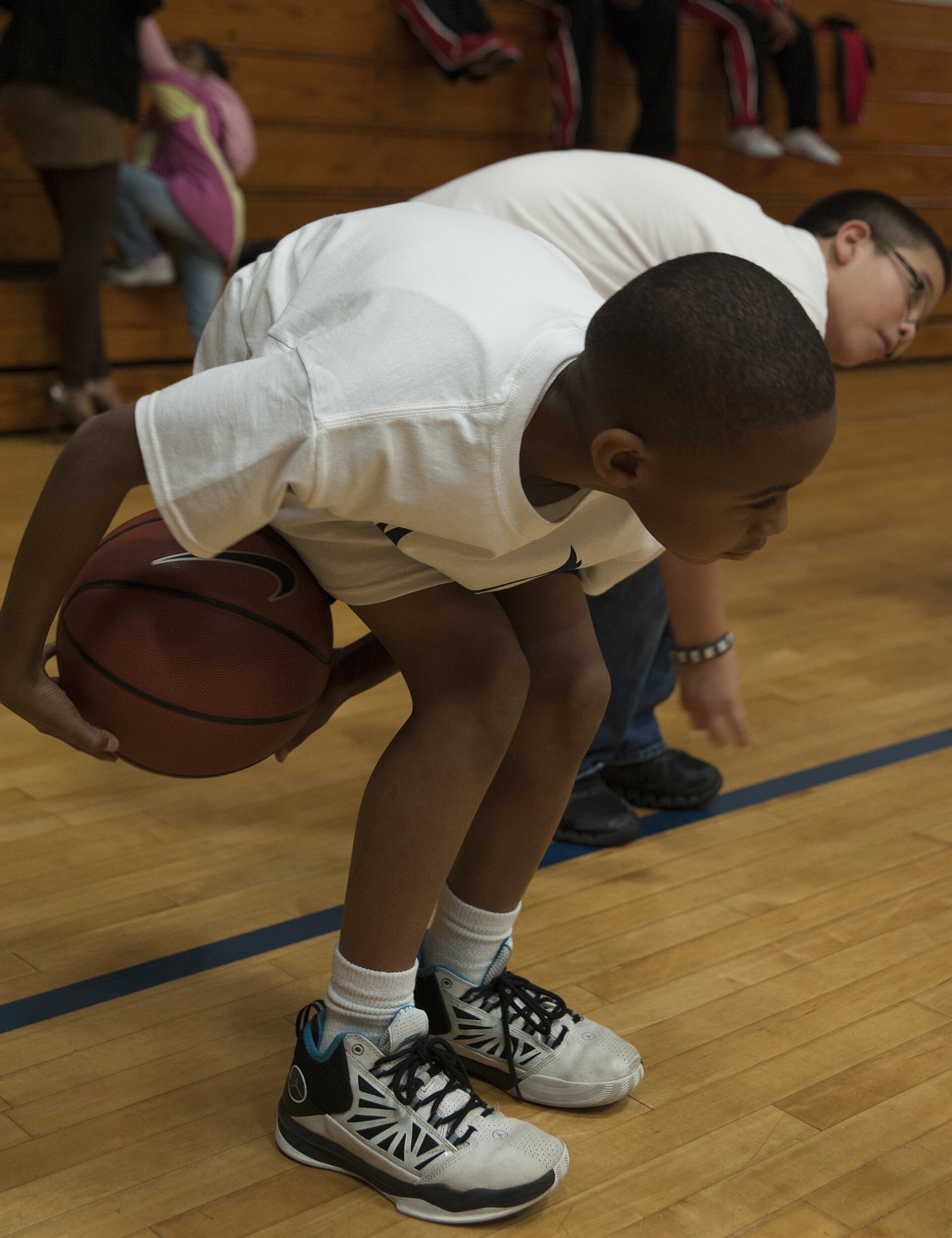

Start By Choosing The Space
The best basketball drills for kids at home depend less on the drill name and more on where the ball can safely go when the child misses. A dry driveway can handle walking dribbles and jump stops. A clear indoor floor may suit ball wraps and form reps. A safe wall can turn passing into useful practice. A tiny room is not the place for fast dribbling.
Use A Simple Space Check
Stand where the child will start and roll the ball gently in the direction a mistake is likely to travel. If it reaches a road, stairs, glass, parked car, pet bowl, or walkway, change the angle or choose a no-bounce drill. A smaller safe lane is better than a bigger space where every loose ball causes panic.
Driveway Or Outdoor Hard Floor
Use Pound Dribble Holds for the first two minutes, then Left Hand Walk And Bounce along a short lane. Keep the ball beside the hip, not out in front of the toes. Add Jump Stop Freeze only after the child can walk and stop without chasing the ball. If the surface is damp, skip the moving dribble and use ball wraps instead.
Indoor Floor With Low Ceiling
Low ceilings and shared rooms are better for Figure-Eight Ball Wraps, Pivot Clock, and slow shooting-form rehearsals than for hard bounces. Ask for quiet feet, a still pivot foot, and a held finish. If the ball starts hitting furniture, the drill has become the wrong drill for the room.
Safe Wall Or Garage Door
A safe rebound surface can make Wall Chest Passes useful, but check the wall first. Use two-hand chest passes from close range, catch with both hands, freeze the feet, then pass again. Do not use windows, thin interior doors, decorated walls, or any surface where a hard rebound could hit someone entering the space.
If There Is A Hoop
Keep the hoop work close and calm. Start with two minutes of stationary control, two minutes of walking dribble, then short shots where the child can reach the basket without throwing from the shoulder. Move closer when the body starts leaning or twisting. Distance is not the reward for being older; it is earned by balance.
If There Is No Hoop
No-hoop practice is still useful for dribbling, footwork, passing, pivots, jump stops, and shooting shape. Be honest with the child about the limit: form work helps the movement, but real shooting touch needs a basket later. That honesty keeps no-hoop practice from feeling like pretend basketball.
A 15-Minute Home Drill Menu
Use three minutes of ball control, three minutes of walking dribbles or ball wraps, three minutes of footwork, three minutes of wall passing or shooting form, and two minutes of a small challenge. Keep the final minute for an easy finish and cleanup. If control falls apart, drop the next block instead of pushing through the plan.
Make The First Target Observable
A good first target is something the child can see or feel: ten waist-high bounces, five left-hand bounces, three quiet jump stops, or four wall passes caught without a lunge. Avoid vague targets such as work harder or get better handles. Specific targets make short home practice feel fair.
When To Make It Harder
Change one thing at a time. Add three walking steps, switch to the weaker hand, narrow the lane, or add a simple call from the parent. Do not add speed and a new hand at the same time. If the child has to chase the ball twice in a row, the drill is telling you to step back.
What To Avoid At Home
Avoid fast crossovers near furniture, blindfold dribbling, full-power wall passes, jumping under a low ceiling, and long shots that force the child to heave the ball. Those choices can look like serious practice, but they usually create poor movement or an unsafe loose ball.
A Parent's Best Cue
Use one cue before the repetition starts: lower stance, ball beside the hip, land and freeze, or catch then pass. After the rep, notice the action that worked. 'You stopped with both feet quiet' gives the child better information than another long correction.
Start With This Route
If this page feels like a menu, use this order first. Keep each block short, then open the drill card when you need the full setup, cues, and easier or harder version.
| Order | Drill | What to do first |
|---|---|---|
| Start here | Pound Dribble Drill For Kids: 8-Minute Control Routine | A pound dribble drill for kids that builds a firm, repeatable bounce, a balanced freeze, and control with both hands in eight clear minutes at home or on court. Start by: 0-1 minute: set the feet, bend the knees, and make three test bounces beside each hip. |
| Then add | Left Hand Dribbling Drill for Kids: 8-Minute Walk and Bounce | This left hand dribbling drill for kids moves from a stationary bounce to a slow walk, an eyes-up check, and a balanced stop. The eight-minute routine gives parents a clear starting point without asking a beginner to race. Start by: Minutes 0-1: stand at the start marker with knees softly bent. Make five left-hand bounces beside the left shoe, catch the ball with two hands, and repeat three calm times. |
| If it fits | Figure-Eight Ball Wraps | A no-dribble ball-handling drill that helps kids move the ball around the legs while staying balanced. Start by: Stand with feet wider than the shoulders. |
| Finish with | Pivot Clock | A beginner footwork drill where the child lands, freezes, and pivots to different clock positions before passing or protecting the ball. Start by: Start with the ball held securely. |
| Keep for later | Wall Chest Pass Basketball Drill For Kids: 10 Minutes | Run this 10-minute wall chest pass basketball drill with one ball and a safe wall. Kids learn to step, pass to a target, catch, balance, and reset. Start by: Start in a balanced stance with the ball held at chest height and the eyes on the wall target. |
Visual Drill Guide
Use these setup sketches before choosing a drill. The feet show the starting shape; the arrows show where the ball or body moves next.
0-1 minute: set the feet, bend the knees, and make three test bounces beside each hip.
Minutes 0-1: stand at the start marker with knees softly bent. Make five left-hand bounces beside the left shoe, catch the ball with two hands, and repeat three calm times.
Stand with feet wider than the shoulders.
Start with the ball held securely.
Common questions
What basketball drills can kids do at home without a court?
Start with stationary dribbling, ball wraps, slow walking dribbles, pivot work, jump stops, wall chest passes on a safe surface, and no-hoop shooting-form reps.
Can kids practise basketball at home without a hoop?
Yes. They can work on ball control, weak-hand touches, passing, footwork, pivots, jump stops, and shooting form. Real shooting accuracy still needs a basket later.
How much space does a child need for home basketball drills?
A short clear lane is enough for many beginner drills. If a missed ball can reach a road, stairs, glass, parked car, or shared walkway, choose a smaller no-bounce drill instead.
What should we do if the ball keeps getting away?
Remove speed first. Return to stationary bounces, ball wraps, or a shorter walking lane before adding the weaker hand, a direction change, or a score.
Recommended drills
Pound Dribble Drill For Kids: 8-Minute Control Routine
A pound dribble drill for kids that builds a firm, repeatable bounce, a balanced freeze, and control with both hands in eight clear minutes at home or on court.
Left Hand Dribbling Drill for Kids: 8-Minute Walk and Bounce
This left hand dribbling drill for kids moves from a stationary bounce to a slow walk, an eyes-up check, and a balanced stop. The eight-minute routine gives parents a clear starting point without asking a beginner to race.
Figure-Eight Ball Wraps
A no-dribble ball-handling drill that helps kids move the ball around the legs while staying balanced.
Pivot Clock
A beginner footwork drill where the child lands, freezes, and pivots to different clock positions before passing or protecting the ball.
Wall Chest Pass Basketball Drill For Kids: 10 Minutes
Run this 10-minute wall chest pass basketball drill with one ball and a safe wall. Kids learn to step, pass to a target, catch, balance, and reset.
Cone Tap Dribble Race
A short dribbling game where kids tap safe markers in order while keeping the ball alive and stopping under control.