
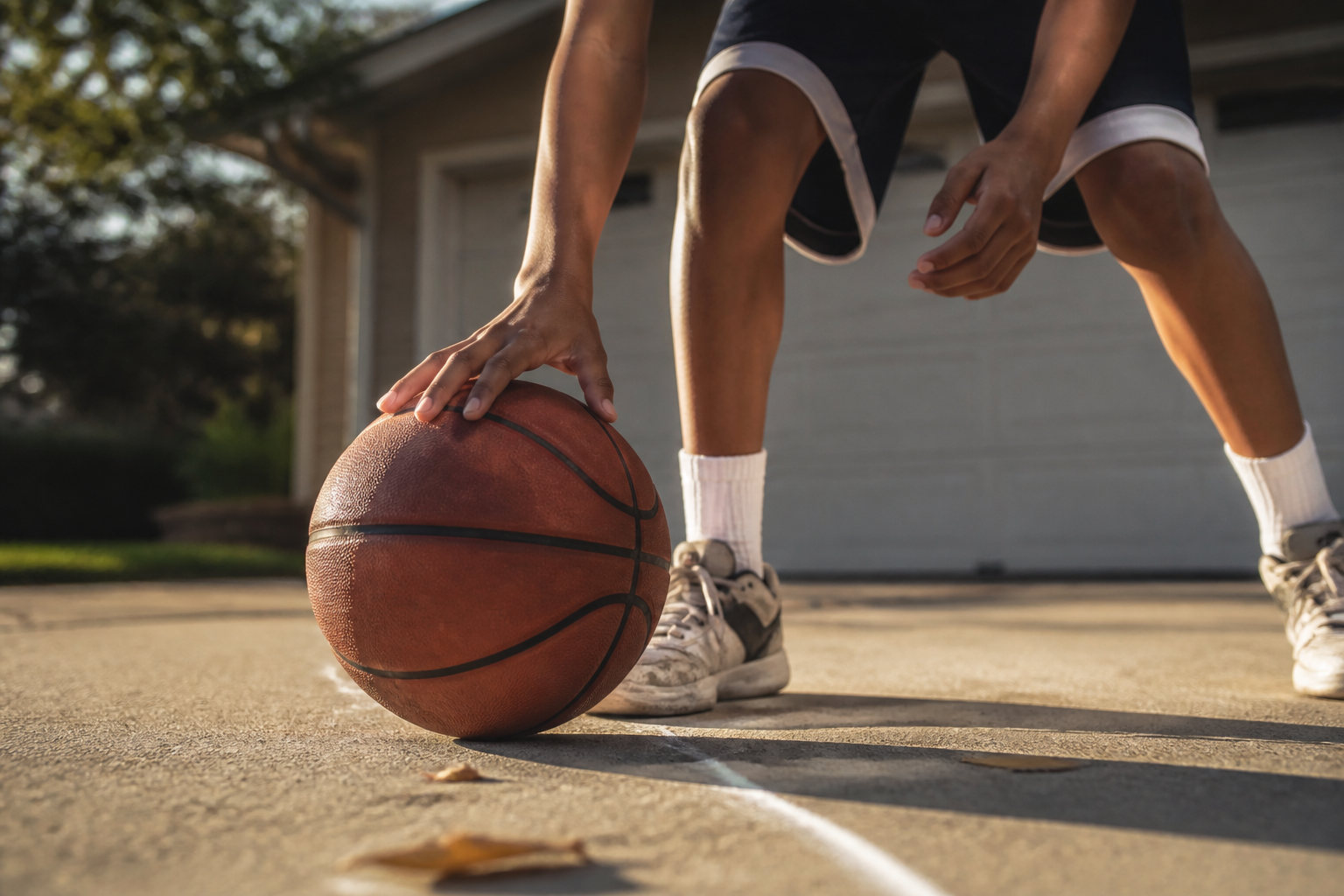
Add a vetted video only when it teaches age-appropriate form without pushing long-distance shots too early.
Short Answer
Teach a child to shoot by starting close, building a balanced base, lifting the ball smoothly through the shot pocket, and holding the follow-through. Do not start with long shots or a high jump.
Start With Balance
A child who is leaning, twisting, or falling forward will usually push the ball from the side. Begin with the feet set, knees soft, and the ball close enough that the movement feels controlled.
Use Form Reps Before Distance
No-Hoop Shooting Form Reps can teach the shape without a make-or-miss result. Once a hoop is available, stand very close and keep the same rhythm.
Keep The Cue Simple
Use one cue at a time: balance, lift, or hold the finish. Too many corrections make young players tense and often make the shot worse.
When To Move Back
Move farther from the hoop only when the child can shoot close without throwing the body forward. Distance should be earned by repeatable form, not by age or pride.
Common Mistakes
Watch for shooting from the hip, leaning forward, flicking from the side of the ball, or rushing the next shot before the feet are reset.
Safety And Space
Use a safe hoop, driveway, court, or open indoor space. Avoid shooting at fragile targets, low ceilings, glass, parked cars, or crowded rooms.
Move Closer Before Adding Power
Start where the child can reach the basket without throwing from the shoulder. If two shots in a row finish short, take one step closer. If the feet twist or the child falls forward, pause the result and rehearse the balanced start again.
Common questions
What age should a child learn shooting form?
A child can learn balance and a simple follow-through early, but distance and power should wait until the movement stays controlled.
Should kids start with one-hand shooting?
Some players benefit from one-hand form close to the hoop, but young beginners often need a simple two-hand setup first. Keep the focus on balance and a relaxed finish.
Can shooting practice work without a hoop?
Yes, form work can happen without a hoop, but accuracy and distance control need a real basket later.
Recommended drills
No-Hoop Basketball Shooting Form Drill For Kids: 8 Minutes
An eight-minute no-hoop basketball shooting form drill for kids to rehearse stance, shot pocket, arm path, and follow-through without an indoor release.
Pivot Clock
A beginner footwork drill where the child lands, freezes, and pivots to different clock positions before passing or protecting the ball.
Wall Chest Pass Basketball Drill For Kids: 10 Minutes
Run this 10-minute wall chest pass basketball drill with one ball and a safe wall. Kids learn to step, pass to a target, catch, balance, and reset.