

Set up the practice lane
Use one age-appropriate basketball, two flat markers or strips of tape, and a dry, level surface. Put the markers four adult paces apart and leave at least two clear paces beyond each end. Keep the lane away from traffic, steps, glass, parked cars, and other players.
Run the session
Find the bounce and freeze
Start with three test bounces beside each hip. Then make five right-hand bounces and gather the ball with two hands. Repeat on the left. Count a set only when the child can freeze for two seconds without stepping after the ball.
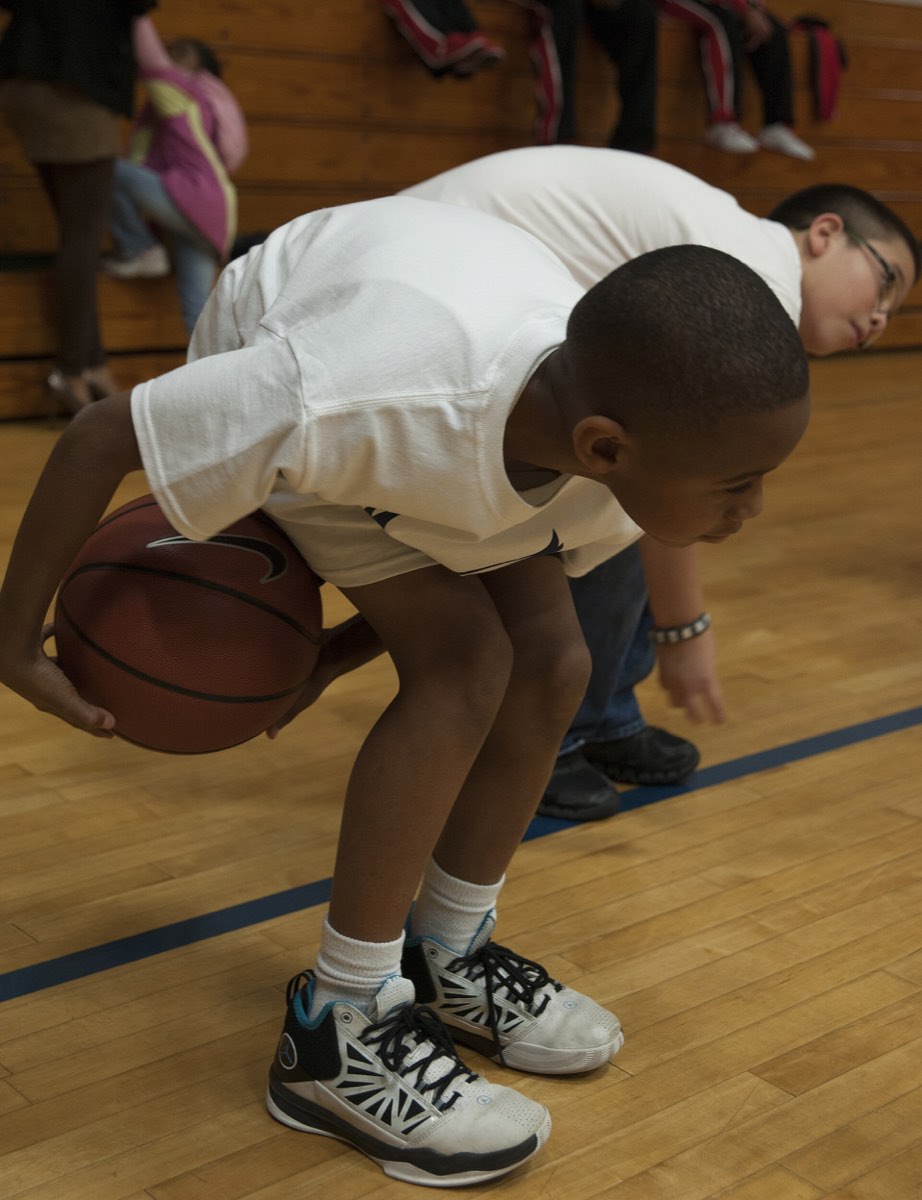
Keep both feet visible and planted just wider than the shoulders. Bounce beside one hip, then gather with two hands and freeze without shifting the feet.
Open the full Pound Dribble Drill For Kids: 8-Minute Control Routine instructions
Walk the lane with the weaker hand
Walk from one marker to the other using the weaker hand. Gather before turning, reset, and walk back. Ask for one brief glance at the far marker on each trip. If the child chases the ball twice, shorten the lane to two paces.
Keep both feet visible as the child walks the lane. The ball stays outside the near foot and beside the body.
Open the full Left Hand Dribbling Drill for Kids: 8-Minute Walk and Bounce instructions
Gather, land, and hold
Rehearse two walking steps and a small two-foot landing without the ball. Then dribble slowly to the far marker, gather with two hands, land on both feet, and hold for two seconds. Finish with one pivot or careful restart only after the landing stays balanced.
Dribble slowly toward the landing box, gather the ball, and place both feet inside before holding the freeze.
Open the full Basketball Jump Stop Drill For Kids: 10-Minute Freeze Routine instructions
What success looks like
- The ball returns beside the hip instead of crossing the toes.
- The child can use the weaker hand for at least one short trip without sprinting after the ball.
- The final gather ends with two feet down and no extra recovery step.
Make it easier
Keep all dribbling stationary. Use five bounces, gather, and freeze before switching hands. For the final block, carry the ball through two walking steps before making the two-foot landing.
Make it harder
Keep the same space and add one choice. Call right or left before the walking turn, or name a pivot direction after the jump stop. Add only one decision at a time.
Safety
Use flat markers on a dry, non-slip surface. Stop if the child reports pain or dizziness, or if tired contacts repeatedly send the ball outside the clear lane. Indoors, check the floor, noise, ceiling, and nearby breakable objects before bouncing.
Common questions
Which basketball drill should a beginner start with?
Start with five stationary bounces beside one hip followed by a two-hand freeze. It shows whether the child can control the height and return point before walking or changing direction.
Can kids practise basketball without a hoop?
Yes. Dribbling, passing to a safe wall, jump stops, pivots, and parts of shooting form can be practised without a hoop. Finishing and judging shot results still need a suitable basket.
What if the ball keeps hitting the child's foot?
Move the bounce beside the hip and widen the feet slightly. If it still reaches the shoe, stop walking and use three stationary bounces followed by a freeze before trying the lane again.
Is 12 minutes a complete basketball practice?
It is a focused home-practice block, not a complete team practice. The NBA and USA Basketball youth guidelines recommend longer organized practices for ages 7-8, while this page gives one short ball-handling starting point.