
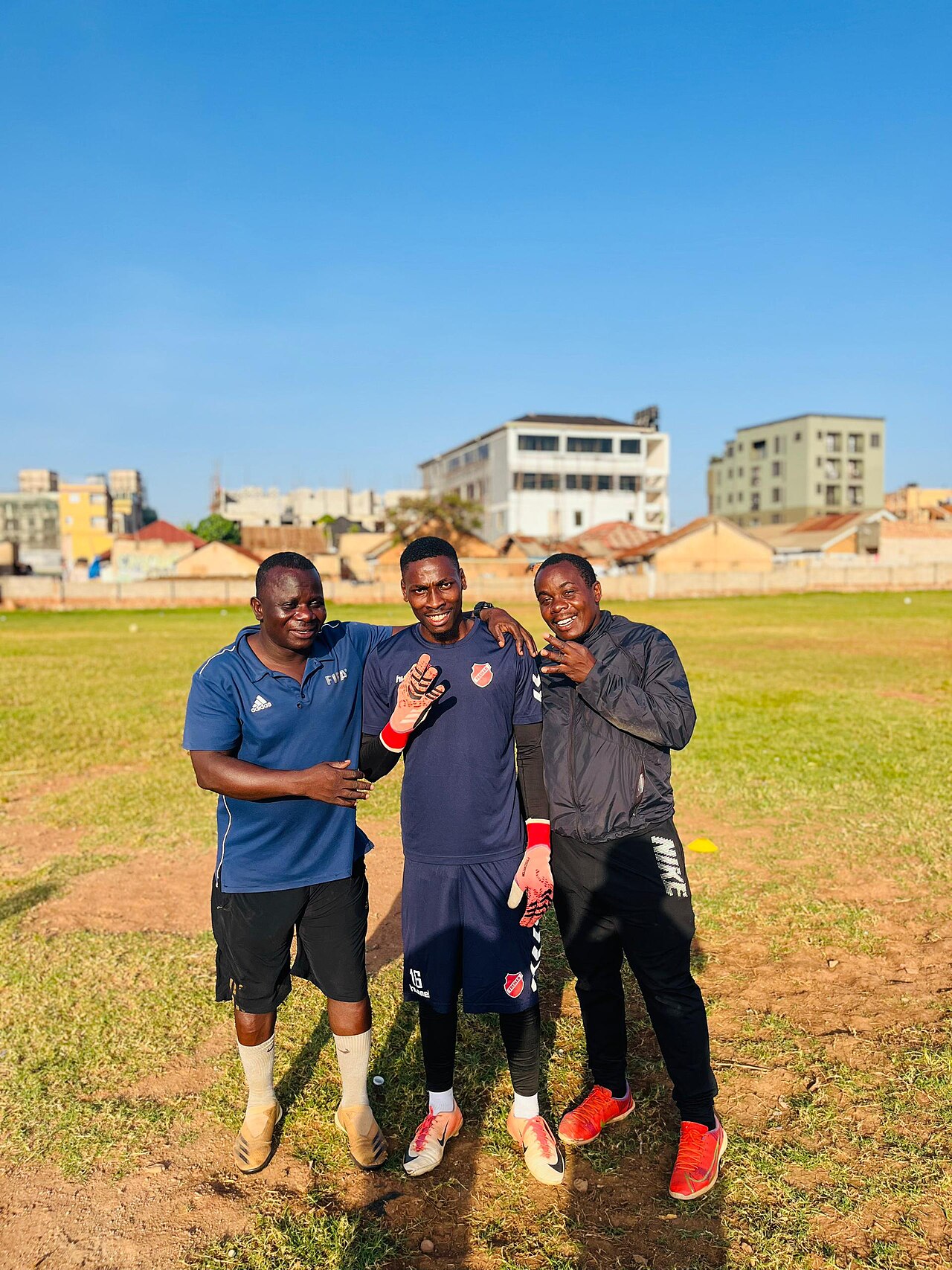

The server waits for still feet, then sends a gentle underarm throw toward the middle. Both of the goalkeeper's feet remain visible and balanced before release.
Check both catching shapes
The setup view above shows the ready position. These views show the hand position for the two reachable service heights used in the routine.
Meet the ball in front with both hands at the same height. Keep some bend in the elbows and hold the balanced stance after contact.
Bring the hands forward and underneath a stomach-height ball, secure it to the body, then return to the middle before the next service.
Setup
Put two flat markers three metres apart to make a small goal. The goalkeeper stands in the middle. The server begins about three metres away with one ball. Use gentle underarm throws that arrive between the stomach and face; the goalkeeper should not need to jump, dive, or protect against pace. Move the server closer if the ball cannot arrive accurately.
What This Drill Is For
This routine teaches the moment before and during a straightforward catch. The goalkeeper sets the feet, shows both hands, tracks a gentle service, secures it, and returns to the middle. It is not a reaction drill or a shooting test. Keeping the service predictable gives a beginner time to feel the ready position and see how the catch changes at chest and stomach height.
Check The Ready Position First
Start with the feet about shoulder-width apart, knees softly bent, chest facing the ball, and body weight slightly forward. Keep the hands in front of the body with the elbows relaxed. Ask the goalkeeper to hold that shape for two seconds. If either heel has to lift sharply or the player sways, let them stand a little taller and reset before adding the ball.
Use Two Catching Shapes
For a chest-to-face-height throw, both hands travel together and meet the ball in front, with the forearms still slightly bent. For a lower throw toward the stomach, bring the hands forward and underneath the ball, then secure it against the body. In both versions, the ball is controlled before it is returned. Do not ask a beginner to choose among several named techniques while the service is moving.
Run The Ten-Minute Routine
Minutes 0-2 are stance checks without a ball: set, hold for two seconds, relax, and repeat. Minutes 2-5 use six gentle chest-height throws, one at a time, with a full reset after each catch. Minutes 5-8 use six lower throws toward the stomach. Minutes 8-10 mix the two reachable heights. Pause whenever the goalkeeper loses the middle or the server's accuracy drops.
Give The Server A Clear Job
The server controls the difficulty. Stand square to the goalkeeper, say 'set', wait until the feet are still, then throw underarm toward the middle of the body. A useful throw can be caught without jumping or stepping more than a few centimetres. If three services in a row miss the body, shorten the distance instead of asking the goalkeeper to rescue poor feeds.
Use A Reset Rule After A Spill
A dropped ball is not a cue for a harder throw. Let the goalkeeper collect it, walk back between the markers, rebuild the ready position, and receive the same height again. If the hands were late, ask for 'hands in front'. If the body moved backward, reduce the pace. Use one correction, then repeat while the previous action is still easy to remember.
What A Clean Repetition Looks Like
The feet are still before release, the eyes stay on the ball, and both hands arrive together. The elbows retain some bend rather than locking straight. The goalkeeper controls the ball without a backward step, holds it for one second, returns it safely, and finds the middle again. That complete sequence matters more than counting only the catches.
How A Parent Or Volunteer Coach Can Help
Watch one detail per round. In the first round, check whether the feet stop before the throw. In the second, watch where the hands meet the ball. In the third, check the reset to the middle. Short prompts such as 'set first', 'meet it in front', and 'middle again' are easier to act on than a running technical explanation.
Stop Before The Service Turns Into Shooting
This drill loses its purpose when the adult starts kicking harder to create saves. Finish the routine while catches remain controlled. Use the separate footwork-and-set drill when the goalkeeper is ready to move before the service, and use scoop-and-smother practice for balls along the ground. Do not add diving on a hard or unsuitable surface.
Steps
- 0-2 minutes: build the ready position, hold it for two seconds, relax, and repeat without the ball.
- 2-5 minutes: receive six gentle underarm throws between chest and face height, resetting fully after each catch.
- 5-8 minutes: receive six gentle throws toward the stomach and secure each ball against the body.
- 8-10 minutes: mix the two reachable heights while the goalkeeper sets before every release.
- After every service: hold the ball for one second, return it safely, and find the middle before starting again.
Coaching points
- Set the feet and let them become still before the server releases the ball.
- Keep the knees softly bent and the chest facing the ball.
- Bring both hands toward the ball together rather than waiting for it against the body.
- Keep some bend in the elbows so the arms can absorb the service.
- Secure the ball before looking away or returning it.
- Reset between the markers after every catch or spill.
Common mistakes
- Throwing before the goalkeeper has set the feet.
- Standing rigid and upright with the hands hanging beside the hips.
- Catching with locked elbows so the ball rebounds away.
- Turning the head or closing the eyes before contact.
- Stepping backward from a gentle service instead of reducing its pace.
- Counting a rushed return as part of the catch.
Make it easier
Begin from two metres with a soft, age-appropriate ball and use only chest-height underarm throws. Let the goalkeeper catch, hold for two seconds, and reset without a time limit.
Make it harder
Add one small side step to a called marker, then require the goalkeeper to return to the middle and set before the same gentle service. Keep the catch reachable and do not add pace at the same time as movement.
How to know it is working
The routine is working when the goalkeeper completes two rounds of six services with still feet before release, both hands meeting the ball, no backward step, and a deliberate reset to the middle after each repetition.
Safety
Use controlled underarm service on dry grass or a suitable all-weather surface. Check that the goal or markers cannot tip or trip the player. Keep other balls outside the working area. Do not use hard shots, diving, or contact in this beginner routine, and stop if a finger, wrist, shoulder, or head hurts.
Common questions
What is the goalkeeper ready position?
For this beginner drill, it is a balanced stance with feet about shoulder-width apart, knees softly bent, weight slightly forward, chest facing the ball, and both hands held in front before the service arrives.
Where should a goalkeeper hold their hands?
Keep both hands relaxed in front of the body, where they can move together toward the ball. Avoid hanging them behind the hips or locking the elbows straight.
How far away should the server stand?
Start around three metres away, then move closer if the adult cannot land gentle underarm throws on the goalkeeper's body. Accurate, reachable service is more useful than distance.
Should this goalkeeper drill include diving?
No. This routine is for setting and catching reachable service while standing. Add movement or diving later in a separate drill on a suitable surface with appropriate instruction.