
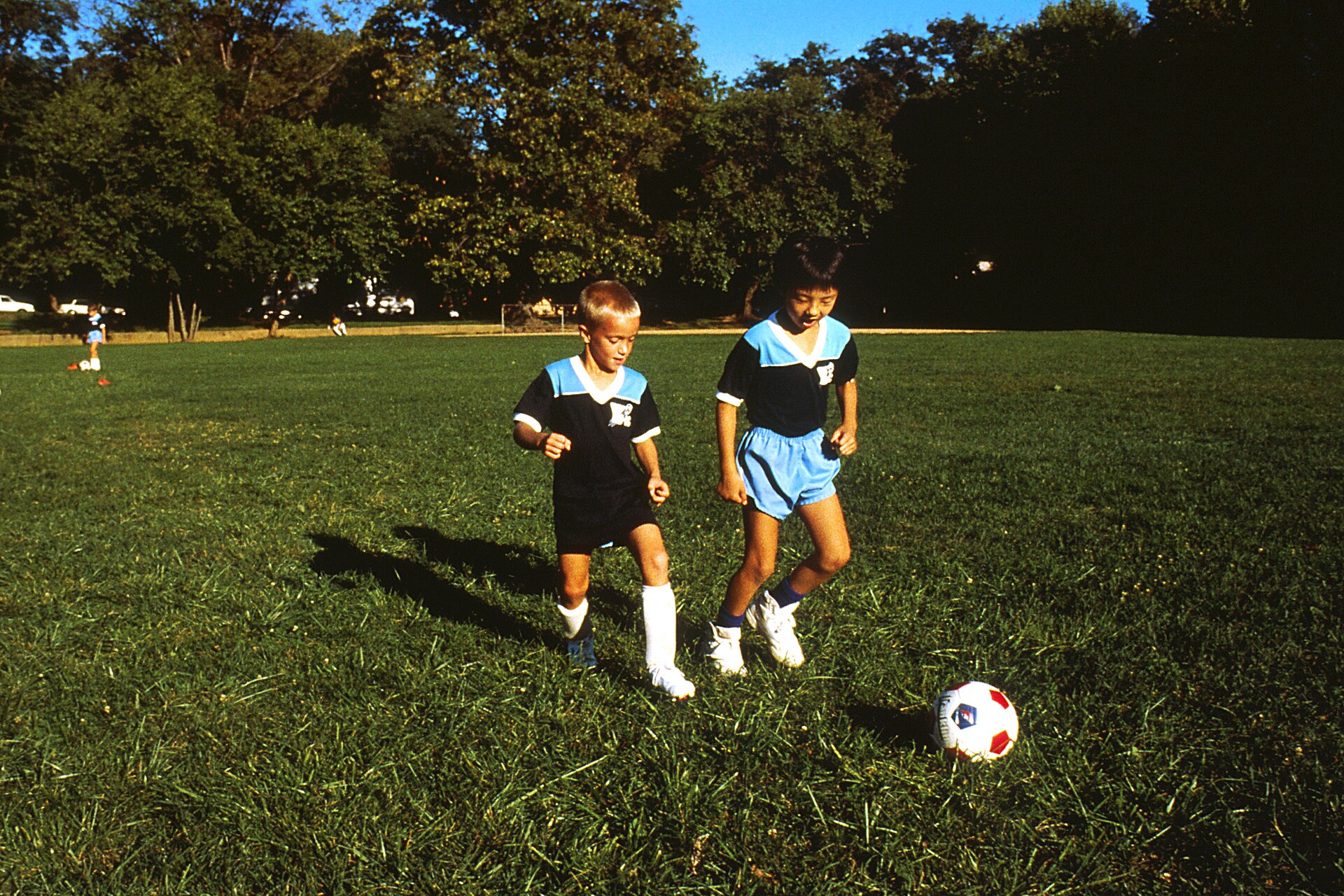

Video: Wall Passing Soccer Workout - Improve First Touch Football Training by DJ Diveny
First Touch Is The Start Of The Next Action
A child's first touch does more than stop a football. It decides whether the next pass is comfortable, whether a dribble can begin without a chase, and whether there is time to look up. At home, the aim is not to make every ball sit perfectly still. It is to help the child receive into a useful place: close enough to play again, but not trapped beneath the feet.
Why Home Practice Can Help
A quiet wall or a gentle pass from an adult removes some of the noise of a match. The child can notice what the ball does after contact and try one change on the next repetition. That predictability is useful, but it should be a starting point rather than the whole skill. England Football describes receiving as a mix of preparation, body position, movement, awareness, and technique. Once the touch is calmer, add a direction or a simple choice so the practice still connects to football.
Careful Supervision Keeps The Task Useful
An adult has two jobs here: provide a manageable ball and protect the practice space. Check the surface, the rebound, and where a loose touch will travel before starting. Feed along the ground, stand outside the receiving lane, and change only one detail at a time. If the child begins snatching at the ball, kicking harder, or checking your reaction after every miss, soften the service and reduce the target. Constant correction usually adds pressure without improving the next touch.
Watch One Minute Before You Coach
Begin with five gentle passes and say very little. Watch where the first touch finishes. A ball stuck under the body needs a clearer side target and a more open starting position. A ball that runs away needs a softer service, a shorter distance, or a more relaxed receiving surface. If the touch is controlled but the next pass is rushed, add a pause to look at the target. Choose the practice from what you see rather than giving every child the same cue.
A First-Touch Home Routine
Use one ball, two flat markers, and either a safe wall or an adult feeder. The standard route has three blocks. For a short version, run the first two blocks. For an extended version, repeat the block that produced the most controlled next action rather than adding a new skill.
Set up before the first ball
Make a gate about one adult step wide and place it one step to the side of the starting position. Stand or use a safe wall about two to four metres away, depending on the child's control. Check that a loose ball cannot reach glass, roads, steps, parked vehicles, other players, or people walking through. Test the first return yourself and change the angle if it bounces or rises unpredictably.
Run the routine
Receive and settle
Send five gentle ground balls. The child receives with either foot and keeps the ball within one comfortable step. After each touch, pause, reset the start position, and return the pass. If two balls need a chase, move closer or slow the feed.
Guide the touch through the gate
Start half-turned and place the gate one step to the left. The child receives and guides the first touch through it, then turns and passes back. Complete four calm repetitions before moving the gate to the right. Allow a second settling touch if that keeps the movement controlled.
Look, choose, and play again
Make a left gate and a right gate using the same two markers, moving one marker between turns if space is tight. The child looks at both before the feed. Call a side early, then let the child receive into that space and return a balanced pass. Delay the call only when the early version remains calm.
What success looks like
- The first touch stays within one playable step more often than it escapes.
- The child can guide the ball to both sides without crossing the legs or lunging.
- The next pass begins from balance rather than immediately after a chase.
- The adult can use one cue and leave the next repetition to teach the point.
Make it easier
Roll the ball, widen the gate, move closer, or allow the child to stop the ball before nudging it sideways. Keep the direction visible even when the task becomes easier.
Make it harder
Narrow the gate slightly, vary the feed by a small amount, call the side later, or add one passive step of pressure. Change one demand at a time and return to the previous version if the touch becomes a chase.
Safety check
Use flat markers, soft ground feeds, and a clear run-off lane. Do not use a wall near windows, vehicles, shared paths, or neighbours who could be struck by a loose ball. Stop for pain, a slippery surface, repeated hard rebounds, or frustration that is no longer settling between attempts.
Match The Practice To The First-Touch Problem
| What you see | Likely issue | Change one thing |
|---|---|---|
| The ball stops under the feet | The child is square or cushioning straight down | Put a gate one step to the side and start half-turned. |
| The first touch runs beyond reach | The feed or contact is too firm | Move closer and roll or pass the ball more gently. |
| The child reaches across the body | The contact happens too early | Slow the ball and let it travel towards the far foot. |
| The touch is tidy but the next pass is rushed | The player has not prepared the next target | Ask for one look before the ball arrives. |
| Every miss becomes a harder kick | Frustration is changing the task | Remove the score and finish with three calm returns. |
| A wall rebound arrives unpredictably | The surface or angle is unsuitable | Use an adult roll or pass instead of the wall. |
Use A Wall Only When The Return Is Safe
A wall gives quick repetition and honest feedback: the pace and angle of the pass shape the return. It is not automatically the best option. If the surface sends the ball into the air, across a path, or towards something fragile, use an adult roll instead. The child should be able to prepare for the return rather than protect themselves from it.
A Useful Touch Does Not Have To Stop Dead
Stopping the ball can be the right choice when pressure is close, but home practice should also show the child how to move the ball towards the next action. The side gate gives the touch a destination. England Football advises coaches to connect receiving with scanning, movement, body position, and the next decision rather than treating control as an isolated trick.
Keep The Cue Attached To Something Visible
Use a phrase such as 'one step away', 'open and guide', or 'look, touch, pass'. Avoid words like better, sharper, or concentrate because the child cannot see what to change. Give the cue before the feed or after the ball stops. Talking while the ball travels competes with the information the child is already trying to read.
Move From Repetition To A Simple Choice
Predictable returns help a child feel the contact, but football rarely sends the same ball to the same place. Once the first two blocks are controlled, add the left-or-right call. The choice should arrive early enough to succeed. Later calls, wider feeds, and passive pressure are progressions, not proof that the earlier work was too easy.
End When The Quality Changes
Finish after a small success: three playable touches, one calm return from each side, or one choice made without panic. Do not keep going until a tidy practice falls apart. If the child is tired or annoyed, name what improved and stop. The next home session can begin with the block that worked rather than repeating everything from the start.
Use The Same Pass Three Ways
Send the same gentle pass to the child three times: first to stop it, then to move it across the body, then to set up a return pass. The contrast helps the child feel why the touch has a direction instead of hearing another abstract instruction.
Common questions
Can first touch improve without a pitch?
Yes. A safe wall or gentle adult feed, one ball, and two markers can provide useful receiving repetitions. A pitch and live opponents matter later, but they are not required for the first controlled step.
Should kids always stop the ball dead?
No. A useful first touch may stop the ball, guide it sideways, take it forward, or move it away from pressure. The next action and available space decide where it should go.
Which part of the foot should a child use for first touch?
The inside of the foot is a clear starting point for gentle ground passes, but children should also learn to use the outside, sole, and other legal surfaces as the ball and next action change. Do not force one surface for every situation.
What if there is no safe wall?
Use an adult or partner to roll and pass the ball along the ground. A controlled feed is better than a wall that creates high, hard, or unpredictable rebounds.
How often should children practise first touch at home?
Repeat the routine when the child is fresh enough to control gentle passes and still wants to engage. Short, calm practices are more useful than extending the work after technique and patience have dropped.
Training sessions
Football First-Touch Control Session for Kids
A ready-to-run football first-touch session for kids that moves from a steady rebound into receiving across the body and choosing the next space.
Recommended drills
Wall Pass And Move
A wall passing drill that teaches an 8-year-old to pass, move, and control the rebound with the first touch.
First Touch Box
A small-box control drill that helps kids cushion the ball and move their first touch into space.
Receive Across The Body
A receiving drill that teaches players to take the ball away from pressure and into the next action.