
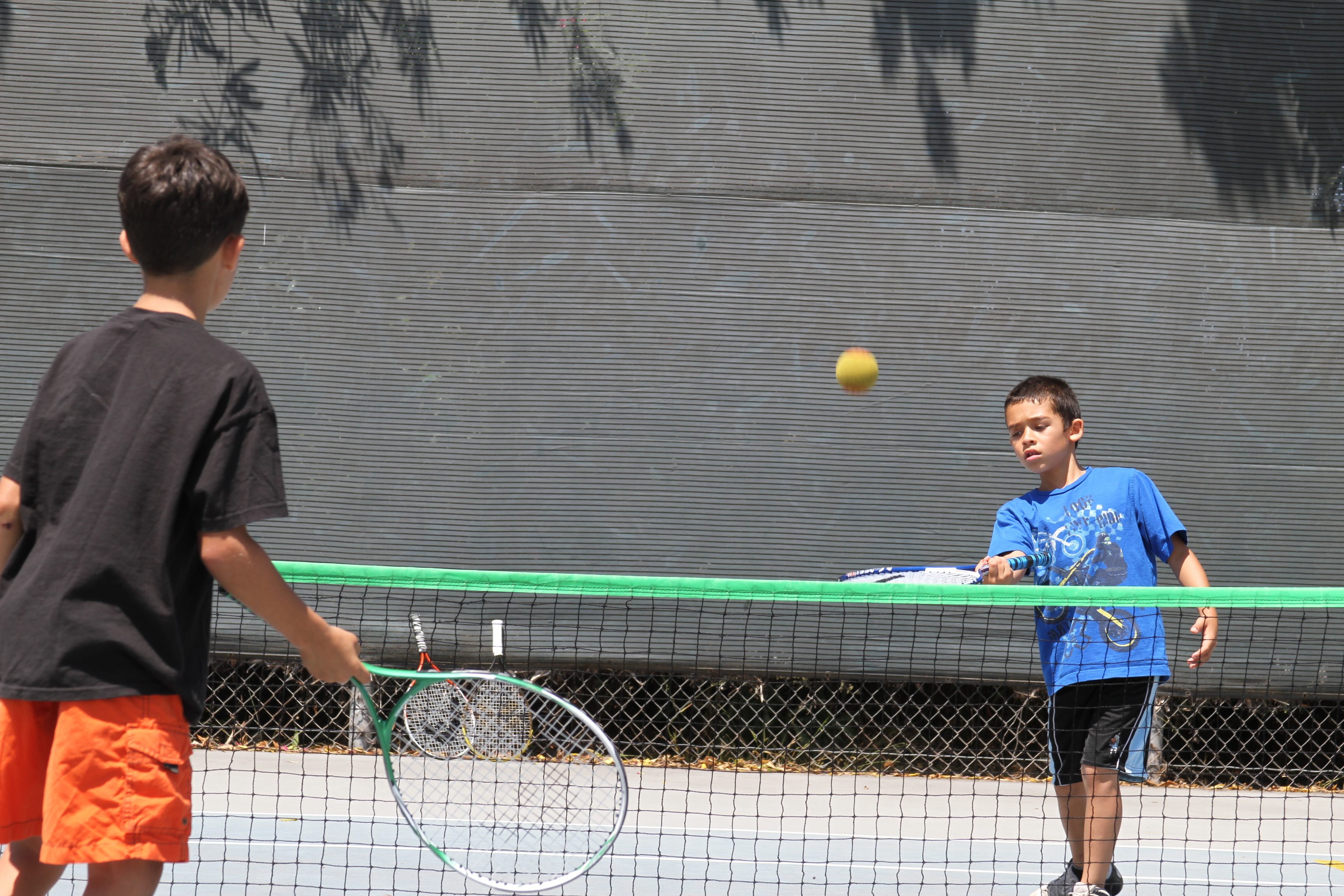

Why A Self-Feed Helps The First Forehand
A forehand can feel like too many jobs arriving at once. The child has to judge a moving ball, prepare the racket, find the bounce, meet the ball in front, and stay balanced. When every feed is different, a late contact can look like a swing problem even when the child simply did not have time to organise. A drop-feed removes that first timing problem. The child controls when the ball starts and can learn one repeatable contact before an adult or partner sends the ball.
Supervision Should Make The Task Safer, Not Louder
An adult still has an important job even though the child feeds the ball. Clear the hitting lane, keep other people outside the racket path, retrieve loose balls only when the racket is still, and watch where the drop lands. Give one short cue between attempts, such as 'drop in front' or 'finish and recover'. Repeating three corrections during the swing usually adds pressure without making the next contact clearer.
What A Useful Forehand Looks Like Here
This drill is not trying to build a powerful match forehand in one practice. The useful picture is smaller: both feet are balanced before the drop, the bounce lands slightly in front of the forehand-side foot, the racket meets the ball between knee and waist height, and the child finishes without falling across the lane. The LTA also advises beginners to prepare early, play the ball in front, use a comfortable finish, and recover for the next shot. Those are the observable jobs used below.
Choose Equipment The Child Can Control
Use a red, foam, or other slower ball when a standard yellow ball bounces too quickly for the child to prepare. The ITF Tennis10s pathway uses slower red, orange, and green stages for young players, while the LTA treats age and racket charts as starting guidance. For an informal drill, the right choice is the ball and racket the child can control safely. Moving to faster equipment is not the goal of the session.
Run The Drop, Meet, And Recover Routine
Use one active ball and reset after every forehand. The standard version has three short blocks. Stop after the first two for a shorter practice, or repeat the final block from a slightly different starting spot for an extended version.
Set up before the first ball
Mark a dry, level lane about five adult paces long and three paces wide. Put a wide two-marker gate at the far end and a centre marker one adult step behind the child's starting point. The child stands far enough from the gate that a short swing can reach it without force. Use one suitable racket and one slower ball. Keep a full racket length plus an adult step clear beside and behind the hitter.
Run the routine
Set, turn, and place the drop
Start behind the centre marker with the racket in front and both feet balanced. Turn the shoulders toward the forehand side. Hold the ball at about waist height and drop it slightly in front of the racket-side foot. Do not swing yet. Let it bounce, catch it, and reset. Make six drops that land inside a flat-marker-sized contact area before adding the hit.
Start balanced, turn the shoulders, and drop the ball slightly in front of the forehand-side foot. The contact circle marks the space the child is preparing to meet.
Drop, bounce, and meet in front
Use the same drop and let the ball rise between knee and waist height. Swing forward with a compact path, meet the ball in front, and send it through or between the wide gate. Freeze the finish for one second. Count six shots that stay inside the lane; a ball can miss the gate and still be a controlled contact.
After one bounce, meet the ball in front with a short forward swing. The ball path stays inside the lane and both feet remain visible through contact.
Send, recover, and choose the next start
After contact, return behind the centre marker before picking up the ball. Alternate a drop from the middle with one from half a step wider on the forehand side. The adult says 'ready' only when the lane is clear. Aim for three controlled sends from each start without rushing the recovery.
Finish the controlled send, then move behind the centre marker before the next drop. The diagram keeps the racket, contact area, ball path, and both feet visible.
What success looks like
- The drop lands in front of the forehand-side foot rather than behind both feet.
- The child meets the ball between knee and waist height with both feet still visible and balanced.
- The shot stays inside the marked lane more often than it escapes, even when it misses the gate.
- The child returns behind the centre marker and waits before starting the next repetition.
Make it easier
Remove the target and practise drop, bounce, catch until the bounce is repeatable. Then move one pace closer, widen the gate, and use a foam or red ball. The adult can place a flat marker where the drop should land, but should not hold the ball in the child's swing path.
Make it harder
Keep the slower ball and change one demand only: narrow the gate, alternate middle and wider starting spots, or have the adult call left or right after the bounce. An extended version can repeat the final block for three more minutes. Do not add a faster ball, longer distance, and smaller target in the same round.
Safety check
Use one active ball, clear misses before restarting, and keep everyone outside the swing area. Check for water, grit, glass, roads, parked cars, and occupied paths. The adult should never reach for the ball while the racket is moving. Stop for pain, dizziness, distress, or repeated loss of racket control.
Change The Drill From What You See
| What happens | Likely first issue | Change one thing |
|---|---|---|
| The ball bounces behind the child | The drop is too close to the body | Release lower and slightly farther in front of the forehand-side foot. |
| The child reaches and falls forward | The starting distance is too long | Move one pace closer and keep the same wide gate. |
| The ball flies high beyond the lane | The racket face or swing is lifting too much | Use a shorter forward send and freeze the strings facing the gate. |
| The ball rolls weakly off the side | Contact is late or crowded | Return to drop, bounce, catch in the marked contact area. |
| The child watches the shot and forgets to reset | The next-action habit is missing | Do not collect the ball until both feet return behind the centre marker. |
Use Short, Standard, Or Extended Versions
For a short version, run the drop-only block and the contact block, then stop while the swing remains controlled. The standard routine uses all three blocks once. For an extended version, repeat the recovery block from one slightly wider starting spot. The extra work should add a new starting picture, not more tired swings.
Move To An Adult Feed Only When The Start Is Stable
A hand feed adds timing and movement that the self-feed removes. Try it when the child can place the drop in front, meet several balls inside the lane, and return to the centre marker without being reminded. The adult should feed from close range with the same underarm path and bounce point. If contact becomes late again, return to the self-feed rather than shouting for a faster swing.
Do Not Turn The Gate Into A Scoreboard
The gate gives the racket face a direction, but it is not the only measure of learning. A balanced contact that misses by a marker width may be more useful than a lucky target hit made while falling. Praise the preparation or recovery you can actually see, then change one setup detail when the same problem repeats.
Where This Drill Fits
Use the ball-control page first when the child cannot yet steady the racket face or place a self-feed. Use the broader tennis drill library when they are ready to choose between different practice problems. This page stays focused on one forehand contact and recovery, so it does not compete with the full beginner session on the tennis hub.
Key pages
Tennis
Tennis for kids and beginners works best when the ball is slow enough to control. Use one racket, a small marked space, and this first session before attempting a full-court rally.
Tennis Drills for Kids: A 12-Minute Starter Routine
Use these tennis drills for kids to build racket control, direct a self-fed ball, and recover after a return. The 12-minute routine needs one racket, one slower ball, an adult feeder, and a small marked space.
Tennis Ball Control Drills for Beginners: 10-Minute Plan
These beginner tennis ball control drills teach a child to steady the racket face, make one small tap, and send a self-fed ball toward a wide gate. Run the complete 10-minute routine with one racket and one slower ball.
Cameron Vale
Cameron Vale writes tennis activities that connect balance, movement, contact, and recovery without asking beginners to cover a full court too soon.
Editorial Policy
How DrillsPedia researches, writes, checks, updates, and labels drills, sessions, videos, and parent guidance.
Common questions
What is a drop-feed forehand drill?
The player drops the ball for themselves, lets it bounce, and hits a forehand toward a target. Controlling the start removes an inconsistent incoming feed so the player can organise the bounce, contact point, and finish.
Where should a child contact a forehand?
For this beginner drill, aim to meet the ball in front of the body after it rises between knee and waist height. The exact contact varies by the child and ball, so use the marked area as a practical starting point rather than a rigid rule.
Which ball should a child use for forehand practice?
Use a slower ball the child can control. Red, orange, and green stages are designed to give young players more time and suitable court dimensions. In informal practice, choose the ball that allows balanced preparation and safe racket control.
Can this forehand drill be done without a tennis court?
Yes, if there is a dry, level lane with a safe run-off area and enough room for the full racket swing. Do not aim toward windows, traffic, parked cars, or people using the space.
When should a child move from self-feed to an adult feed?
Move on when the child can place the bounce in front, make several controlled contacts inside the lane, and recover before the next repetition. Keep the first adult feeds slow, close, and repeatable.