
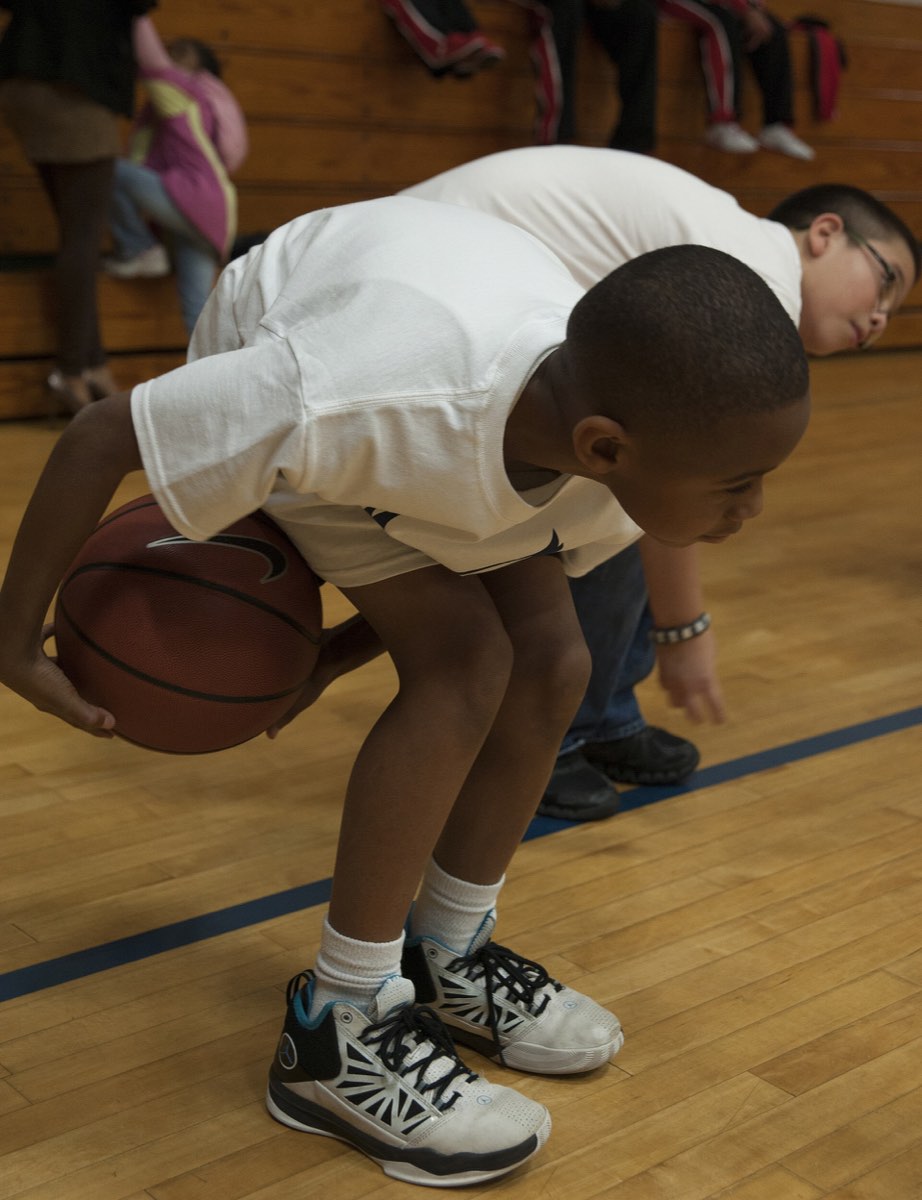

Keep both feet visible and planted just wider than the shoulders. Bounce beside one hip, then gather with two hands and freeze without shifting the feet.
Check the contact and the finish
The setup view above shows the ball position. These views show how the hand sends the ball down and how every short set ends.
Meet the ball above it and push toward the floor with the fingers and wrist. The ball stays beside the hip while both feet remain planted.
Gather with two hands after the final bounce. Hold the stance for two seconds; neither foot should need to chase the ball.
Setup
Choose a dry, level surface and clear at least two large steps around the child for a loose bounce. Stand with the feet just wider than the shoulders, knees comfortably bent, and the ball beside one hip rather than in front of the toes. The free hand stays relaxed in front of the body without pushing anything away.
What This Drill Is For
A pound dribble is a firm stationary bounce, not a contest to hit the floor as hard as possible. The useful target is a ball that returns to the same hand at a manageable height while the child's feet and chest stay balanced. It gives a beginner repeated contact with the ball before walking, changing direction, or dealing with a defender.
Find The Bounce Before Starting The Clock
Ask for three test bounces beside the right hip. The ball should return no higher than the waist and close enough for the next contact without reaching across the body. If it rises above the waist, soften the push. If it barely returns, add a little more wrist and arm extension. Repeat on the left before the timed routine begins.
Run The Eight-Minute Routine
Minute 0-1 is stance and three test bounces on each side. Minutes 1-3 are right-hand sets of five bounces followed by a two-hand freeze. Minutes 3-5 repeat on the left. Minutes 5-7 alternate hands after every five controlled bounces, gathering the ball before each switch. Minute 7-8 is an eyes-forward finish: make five bounces, glance at the adult's raised hand, then freeze. Use only one short glance per set.
Use A Reset Rule Instead Of More Corrections
If the child chases the ball twice in one set, stop the count. Move the ball back beside the hip, lower the bounce, and restart with three contacts. Do not keep counting wild bounces. The reset preserves the action you are trying to teach and gives the child a clear way back into the drill.
What A Good Repetition Looks Like
Both feet stay planted, the knees remain softly bent, and the ball returns near the same hip. The hand meets the ball above it and sends it down with the fingers and wrist rather than slapping sideways. At the finish, the child gathers with two hands and can hold the stance for two seconds without stepping after the ball.
Connect It To The Next Basketball Action
The stationary pound dribble is a starting drill, not a complete ball-handling session. Once both hands can complete several calm sets, move to Left Hand Walk And Bounce or the U8 dribbling session. Keep the same standards: the ball stays beside the body, the eyes make brief checks ahead, and the player can stop under control.
How A Parent Can Help
Stand in front and slightly to the free-hand side, outside the loose-ball path. Count only controlled contacts. Use one cue before the set, such as 'ball beside your hip' or 'freeze on five'. During the set, let the child hear the bounce and solve it. If posture changes, shorten the set rather than stacking more instructions.
Surface And Safety Check
Use a dry court, driveway, or non-slip hard floor with clear space from walls, glass, stairs, traffic, and other players. An indoor ball can be loud and may damage fragile flooring, so check the space first. Stop if the child reports wrist, finger, shoulder, or back pain; a technique drill should not continue through pain.
Steps
- 0-1 minute: set the feet, bend the knees, and make three test bounces beside each hip.
- 1-3 minutes: make five firm right-hand bounces, gather with two hands, and freeze for two seconds.
- 3-5 minutes: repeat the same five-bounce sets with the left hand.
- 5-7 minutes: gather and switch hands after every five controlled bounces.
- 7-8 minutes: make five bounces, take one short glance at the adult's hand signal, then gather and freeze.
Coaching points
- Meet the ball with the fingers and finger pads, then push it down; avoid a flat-handed slap.
- Keep the bounce at waist height or lower so the next contact stays manageable.
- Keep the ball beside the hip and outside the nearest shoe, not between the feet.
- Let the knees stay bent while the chest remains tall enough to look ahead.
- Gather with two hands and freeze before changing sides.
Common mistakes
- Trying to create noise by hitting harder than the child can control.
- Slapping across the side of the ball so it travels away from the hip.
- Standing upright or leaning so far forward that the feet have to move.
- Bouncing above the waist and reaching for the next contact.
- Continuing the count after the ball has been chased out of the stance.
Make it easier
Use sets of three, allow the child to watch the ball, and make the bounce only firm enough to return to the same hand. A slightly smaller age-appropriate basketball can also make hand control easier.
Make it harder
Keep the feet planted and add one brief eyes-up signal during the set. Later, alternate hands after each controlled five-bounce block. Do not add walking until the stationary freeze remains balanced.
How to know it is working
The drill is working when each hand can complete three five-bounce sets with the ball returning beside the same hip, followed by a two-hand freeze without an extra step.
Safety
Use a non-slip surface and leave a two-step clear recovery area. Keep the child away from roads, stairs, glass, and people crossing the space. Stop before tired shoulders make the bounce wild or if any movement causes pain.
Common questions
How hard should a child pound dribble?
Firm enough for the ball to return predictably to the same hand, but not so hard that it rises above the waist, changes direction, or pulls the child out of balance.
Should an 8-year-old look up while doing this drill?
Let the child look at the ball while learning the bounce. Once a five-bounce set is controlled, add one brief glance at a hand signal before the gather and freeze.
How high should a pound dribble be?
For this beginner drill, keep the ball at waist height or lower. The exact height matters less than whether it returns close to the same hip for the next controlled contact.
Should kids practise both hands?
Yes, but the sides do not need identical results immediately. Use the same short set on each hand and make the less comfortable side easier rather than skipping it.