

Video: Fundamentals of Dribbling by Jr. NBA Jr. WNBA
What This Page Is For
Use this page when a child is new to dribbling or keeps losing control but you are not sure which drill fits the problem. The order is simple: make the bounce predictable while standing still, carry that control into a slow walk, then finish with a balanced stop. The U8 page handles age-specific practice; this hub works as the broader starting point for young beginners.
What To Watch In The Demonstration
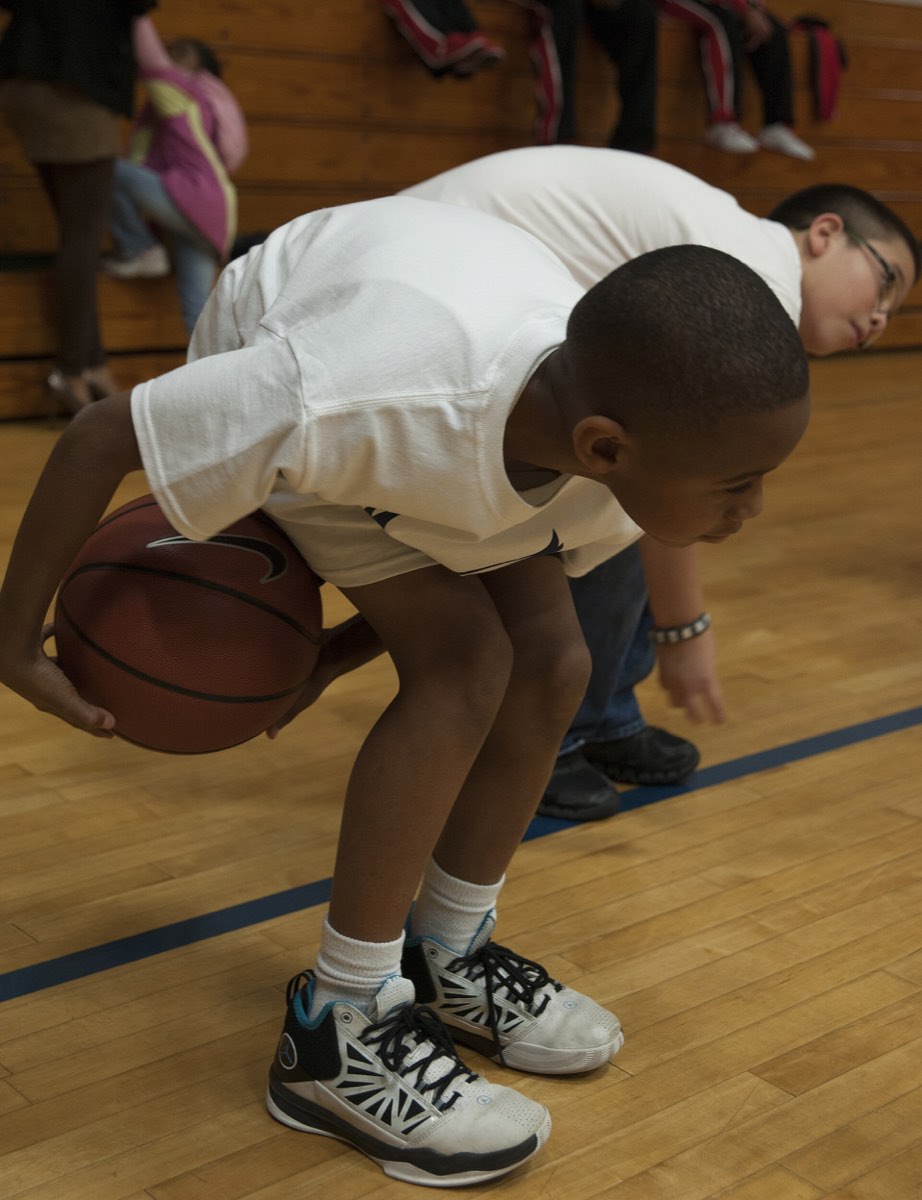
The Jr. NBA video shows the whole body, including the feet. Watch the stance before the moves: the knees stay bent, the chest stays up, and the dribble is pushed with the fingers rather than slapped from above. Also notice the free arm and body position used to protect the ball. A beginner does not need to copy every move in the clip. Start with the stance and one controlled hand.
Set Up A Safe Dribbling Lane
Use one ball and a dry, level surface. Mark a lane about three adult steps long with shoes, chalk, or two flat markers. Leave clear space beyond both ends because beginners often need one extra step to recover a loose bounce. Move away from roads, stairs, glass, parked cars, and other players' feet. Indoors, switch to ball wraps if the floor is slippery, the bounce is too loud, or a loose ball could hit something fragile.
Run This 12-Minute Beginner Dribbling Routine
Minute 0 to 1: let the child bounce freely while you watch. Minutes 1 to 4: use Pound Dribble Holds, switching hands after each short set. Minutes 4 to 7: walk the marked lane with the stronger hand, then try the weaker hand for the return. Minutes 7 to 10: take one or two dribbles into Jump Stop Freeze. Minutes 10 to 12: finish with Cone Tap Dribble Race or five calm bounces and one clean stop. Keep the finish controlled rather than turning the last two minutes into a sprint.
Start With A Predictable Bounce
For Pound Dribble Holds, place the ball beside the hip, not in front of the toes. Ask for five waist-high bounces, catch, and reset. If the ball crosses the child's body or clips a shoe, reduce the force and shorten the set to three. The useful test is not how hard the bounce sounds. It is whether the ball returns to roughly the same hand position without a chase.
Add Movement Without Adding Speed
Once stationary sets are steady, use three slow walking steps. The child should move after the bounce has settled, not run first and hope the hand catches up. On the return trip, try the weaker hand. If control breaks twice in a row, go back to standing for one set, then shorten the lane. That keeps the same skill in the practice without rewarding rushed repetitions.
Teach The Stop As Part Of Dribbling
A dribble is not finished cleanly until the player can gather the ball and balance. For Jump Stop Freeze, use one slow dribble, pick up the ball, land on two feet, and hold still for one second. Check the feet before adding a pass or turn. If one foot keeps stepping through, remove the approach and practise the two-foot landing while holding the ball first.
Use One Coaching Cue Per Round
Choose one cue before the child starts: ball beside the hip, knees soft, eyes forward for one bounce, or freeze the feet. Let the round finish before giving another instruction. Calling four corrections during the dribble often makes a beginner tense and look down harder. A specific note after the rep, such as 'that bounce came back beside your shoe,' is easier to use on the next attempt.
Move From Looking Down To Looking Ahead
Do not demand a fixed head-up position from the first bounce. Hold up one, two, or three fingers after the child has made three steady bounces. They glance up, call the number, and check the ball again if needed. When that works while standing, repeat it during three slow steps. The separate eyes-up guide has the full progression for children who can control the ball but still watch every contact.
Make A Drill Easier Without Changing Its Purpose
Shorten the set, widen the lane, remove the score, or use the stronger hand for one reset. If bouncing itself is the problem, use Figure-Eight Ball Wraps so the child can learn hand control and body position without chasing the ball. Return to a bounce after two calm rounds. Easier should mean fewer demands at once, not a completely unrelated activity.
Know When To Progress
Add one challenge only after the child can repeat the current version. That might be two extra steps, one glance ahead, a weaker-hand return, or a stop at the marker. Do not add speed, a direction change, and a defender together. Progress is visible when the ball stays near the body, recovery takes fewer steps, and the child can stop without shuffling.
Adapt It For A Small Group
Give each player a marked spot for stationary work, then send one player at a time through the walking lane. Players waiting can do ball wraps instead of standing in a line. For a fun finish, score one point for reaching the marker under control and one point for a balanced stop. Do not award the fastest time if speed makes the ball leave the lane.
When To Stop The Session
Pause if the surface becomes wet, the ball repeatedly reaches an unsafe area, or the child is using speed to force a tired movement. End on a simpler success: three controlled bounces, a secure catch, and quiet feet. A short practice that stays clear is more useful than extra minutes of chasing the ball.
Which Basketball Dribbling Drill Should You Start With?
| What you see | Start with | First adjustment |
|---|---|---|
| The ball rises above the waist or drifts away | Pound Dribble Holds | Use three stationary bounces beside the hip, then catch. |
| Control disappears as soon as the feet move | Left Hand Walk And Bounce | Use the stronger hand first and walk only three steps. |
| The child watches every bounce | Finger-number progression | Ask for one quick glance after three steady bounces. |
| Extra steps appear after the ball is picked up | Jump Stop Freeze | Use one dribble, land on two feet, and hold for one second. |
| The space is too tight or noisy for bouncing | Figure-Eight Ball Wraps | Remove the bounce and move the ball slowly around the legs. |
| The child needs a game at the end | Cone Tap Dribble Race | Score control and a clean stop instead of speed. |
Visual Drill Guide
Use these setup sketches before choosing a drill. The feet show the starting shape; the arrows show where the ball or body moves next.
0-1 minute: set the feet, bend the knees, and make three test bounces beside each hip.
Minutes 0-1: stand at the start marker with knees softly bent. Make five left-hand bounces beside the left shoe, catch the ball with two hands, and repeat three calm times.
0-2 minutes: step, make a small hop, land on two feet inside the box, and freeze without the ball.
Stand with feet wider than the shoulders.
A Quick Dribbling Diagnosis
A ball bouncing above the waist usually needs a lower hand position and less force. A ball striking the foot often means the player is standing too narrow. If control disappears only while moving, return to a slow walk before adding a race or change of direction.
Common questions
What basketball dribbling drill should a beginner learn first?
Start with short sets of stationary pound dribbles. The child can learn stance, hand control, and bounce height before movement adds another problem.
How long should a child practise dribbling?
A focused 10 to 15 minutes is enough for a beginner session. Stop earlier if control, attention, or the practice surface becomes unsafe.
Should children practise with both hands?
Yes. Begin each new task with the hand that gives the child control, then use a shorter set or shorter lane with the weaker hand.
Can these basketball dribbling drills be done at home?
Yes, on a safe driveway or hard floor with room for a loose ball. In a small or noise-sensitive indoor space, use no-bounce ball wraps and footwork instead.
When should a beginner learn crossovers?
Add a simple crossover after the child can keep a stationary dribble beside the body, walk under control with either hand, and stop without extra steps.
Training sessions
15-Minute U8 Basketball Dribbling Session
A ready-to-run 15-minute U8 basketball dribbling session that builds a reliable bounce, manageable weaker-hand movement, and a balanced jump stop.
10-Minute Weak-Hand Basketball Session Plan for Kids
A ready-to-run 10-minute weak-hand basketball session for kids: build a steady bounce, walk under control, then finish with a short marker game.
Recommended drills
Pound Dribble Drill For Kids: 8-Minute Control Routine
A pound dribble drill for kids that builds a firm, repeatable bounce, a balanced freeze, and control with both hands in eight clear minutes at home or on court.
Left Hand Dribbling Drill for Kids: 8-Minute Walk and Bounce
This left hand dribbling drill for kids moves from a stationary bounce to a slow walk, an eyes-up check, and a balanced stop. The eight-minute routine gives parents a clear starting point without asking a beginner to race.
Basketball Jump Stop Drill For Kids: 10-Minute Freeze Routine
A 10-minute basketball jump stop drill for kids that teaches a controlled gather, a two-foot landing, a visible freeze, and a balanced next action.
Figure-Eight Ball Wraps
A no-dribble ball-handling drill that helps kids move the ball around the legs while staying balanced.
Cone Tap Dribble Race
A short dribbling game where kids tap safe markers in order while keeping the ball alive and stopping under control.