

The Short Answer
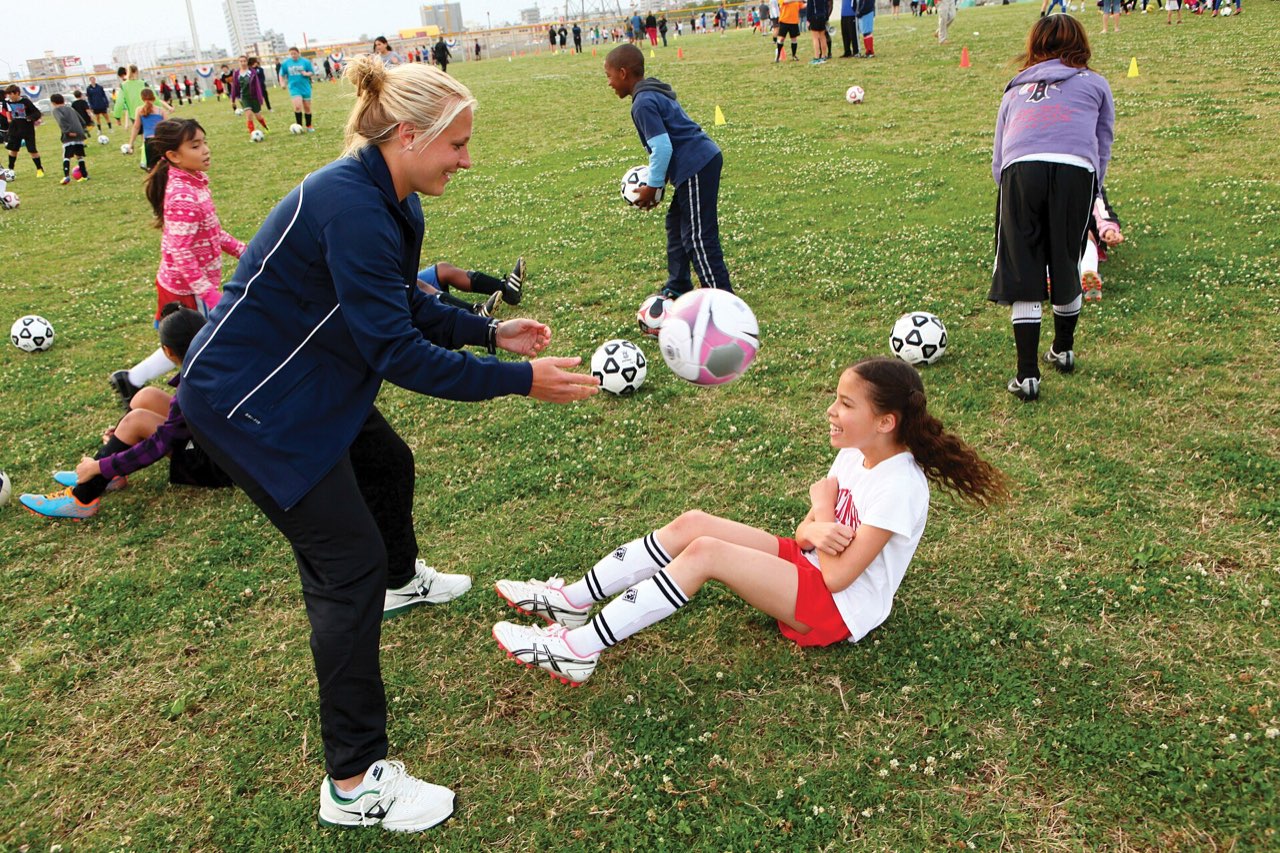
To help an 8-year-old pass better, first work out whether the pass, the first touch, or the movement after the pass is breaking down. Then practise that one part at short range. The 12-minute routine below uses a wide gate, a receiving box, and either a safe wall or an adult return. Accuracy and a playable next touch matter more than power.
Watch Five Passes Before Coaching
Set a gate about one metre wide and stand close enough that the child does not need a run-up. Ask for five passes through it and say nothing about technique yet. Notice the pattern. Passes missing both sides point to balance or contact. For example, a straight pass that races beyond the target usually needs less force or a shorter distance. A good pass followed by a wild return touch is a receiving problem, not a kicking problem.
Set Up One Safe Practice Lane
Use one ball, two flat markers for the gate, and four markers for a box about two metres square. Start three metres from the gate and leave clear space behind it. For the final block, use a wall only if the surface can take soft passes and the rebound path is away from glass, cars, roads, and people. A parent can roll or pass the return instead.
Minutes 0-3: Find A Calm Ground Pass
Play six passes through the wide gate with the comfortable foot. Collect the ball after each pass so every repetition begins in the same place. Ask for a smooth ball through the middle, not a hard ball. If the child misses twice in different directions, move one step closer. If every miss bends to the same side, check that the standing foot lands beside the ball and the body is not falling away.
Minutes 3-6: Make The Return Playable
Move to the two-metre box. Roll or pass the ball gently into it. The child takes one touch toward open space and sends the next pass back. The touch does not have to stop the ball dead; it should leave a simple pass available. The FA describes receiving as controlling the ball so the next action can happen. If the ball leaves the box twice, slow the service before giving another cue.
Minutes 6-9: Pass And Move One Step
Use a safe wall or stand in as the return passer. The child passes, moves one step sideways, receives, and passes again. Begin close enough for the rebound to arrive along the ground. Stop the sequence when the child has to chase. Reset, move closer, and try again. This block links the kick to the next job instead of teaching the child to admire the pass and stand still.
Minutes 9-12: Choose The Fix
Repeat the block that exposed the clearest problem. Use the gate for aim, the box for first touch, or pass-and-move for rhythm. Give the child a small target they can see: four passes through the gate from six attempts, three first touches that stay in the box, or three wall returns without a chase. End after one successful round rather than stretching the session until the contact becomes hurried.
Use One Cue For Each Problem
For a pass that sprays sideways, try 'step beside the ball'. For a ball struck too hard, use 'roll it through the gate'. For a first touch that escapes, say 'leave it close enough to pass'. For a child who freezes after kicking, use 'pass, then find a new angle'. Give the cue before the ball moves, watch two or three attempts, and change the task if the cue is not helping.
Do Not Turn The Inside Foot Into A Rule
The inside of the foot is a clear starting surface for a calm short pass, but it is not the only legal or useful contact. The FA's passing guidance includes the inside, outside, front, heel, and sole. If the child toe pokes every gentle pass and accuracy suffers, teach the inside-foot option in the gate block. Do not correct a quick toe contact that solves a tight match moment.
Add A Decision Before Adding Distance
When the child can pass and receive at short range, give the action a simple choice. Put one gate slightly left and one slightly right, then call the target before the final step. Or ask the child to look up and choose which side of the box has space. Passing in football also depends on scanning, timing, movement, and positioning, so a longer kick is not automatically the next progression.
What Progress Looks Like
Look for a smaller miss, a softer first touch, or quicker movement into the next position. In a game, progress may be one early look toward a teammate or one pass that is easier to receive. Do not promise that a home routine will transform match play. Keep team practice, small-sided games, and free play in the week because they provide teammates, opponents, and changing decisions that a wall cannot.
Stop When The Setup Or Movement Becomes Unsafe
Use a dry, level surface and flat markers that will not cause a trip. Keep the ball on the ground in a tight space. Stop if pain appears, if tired swings repeatedly send the ball out of the clear lane, or if the child can no longer notice people entering the area. A shorter calm session is more useful than finishing all 12 minutes in a risky space.
Match The Fix To The Passing Problem
| What you see | Likely place to start | First adjustment |
|---|---|---|
| Passes miss on both sides | Gate Passing | Widen the gate and move one step closer. |
| Passes are straight but too hard | Gate Passing | Ask the ball to roll through the gate, not race beyond it. |
| The return touch runs away | First Touch Box | Slow the service and make the box larger. |
| The child passes and stands still | Wall Pass And Move | Walk one sideways step before the rebound arrives. |
| Technique looks calm until pressure arrives | Two-gate choice | Call the open gate before the final step, without adding a defender yet. |
Set Up The Three Passing Blocks
Use these pictures before the ball moves. Each one shows both feet, the ball path, and the target or rebound that matters in that block.
Start about three metres from a one-metre gate. Set both feet, play a calm ground pass through the middle, collect the ball, and reset.
Roll or pass gently into the box. The first touch should leave the ball close enough for a balanced return pass without a chase.
Use a safe wall or a parent return. Pass softly, move one step to a new angle, then control the return before the next pass.
Try This Before Correcting The Kick
Set two markers about a metre apart and stand close enough for the child to pass without swinging hard. Ask for five passes through the gate. A wide miss suggests contact or body angle; a straight pass with too much pace suggests the target is too far away or the child is trying to impress with power.
Common questions
How long should an 8-year-old practise passing?
This routine lasts 12 minutes, but it can stop earlier when concentration, contact quality, or safety drops. The useful length is the period in which the child can still notice the target and control the next action.
Should I correct the kicking foot or the first touch first?
Start with the first part that breaks the sequence. If the pass reaches the target but the return escapes, work on the first touch. If the pass misses before a return is possible, shorten the distance and simplify the contact first.
When should my child use the weaker foot?
Add a few weaker-foot passes after the child has found a calm rhythm. Keep the gate wide and the distance short. Treat the attempts as exploration, not a test that both feet must already be equal.
Why does my child kick football passes too hard?
The target may be too far away, the run-up may be too long, or the child may be chasing power instead of a receiving target. Move closer, remove the run-up, and ask the ball to roll through a wide gate.
Can an 8-year-old practise passing without a partner?
Yes. A wide gate can test aim without a partner, and a safe wall can return soft passes. Check the wall and rebound path first, stay close, and stop when the child has to strike hard or chase the ball.
Recommended drills
Gate Passing Football Drill for Kids: Aim and Weight
This gate passing football drill for kids gives every pass a visible target. Use it to help a child judge direction and weight, receive under control, and recover from a miss without turning practice into a test.
First Touch Box
A small-box control drill that helps kids cushion the ball and move their first touch into space.
Wall Pass And Move
A wall passing drill that teaches an 8-year-old to pass, move, and control the rebound with the first touch.