
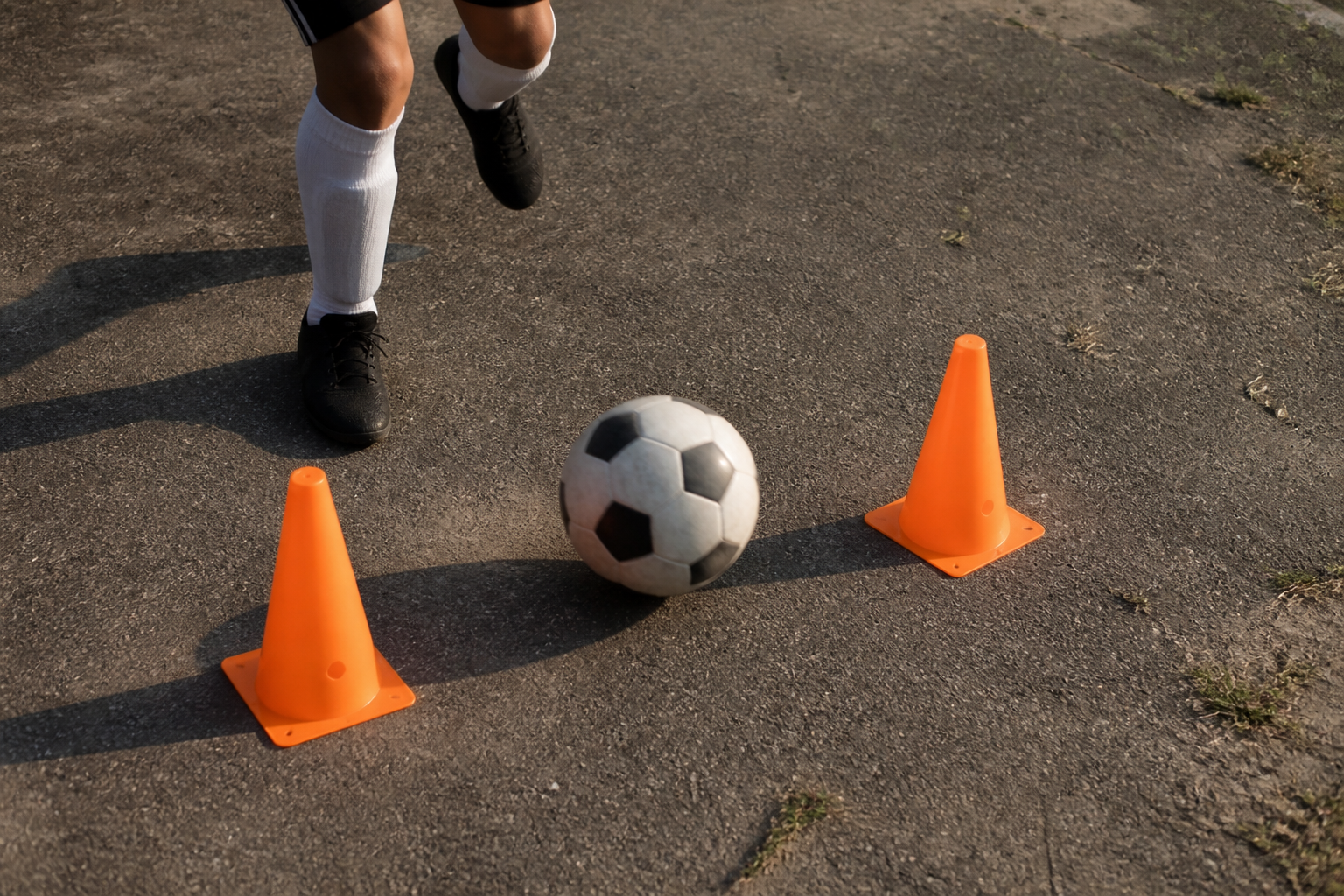
Make The Day Predictable
Help match-day confidence by removing surprises where you can: arrive with time, keep the warm-up familiar, give one cue, and leave the big review for another day.
Before The Match
Use the same small routine. Pack the same way, arrive early enough to settle, and let the child touch the ball before the game starts if the setting allows it.
One Useful Cue
Choose a cue the child can act on: look for one simple pass, move after you pass, or try your first touch away from pressure. Avoid giving a whole tactical speech.
During The Game
Encouragement from the side should not become remote control. Young players need space to notice the game and make imperfect choices.
After The Match
Start with effort, bravery, or one moment the child remembers. Save technical fixes for practice, where there is a ball and a chance to try again.
Build One Reliable Action
Short passing or first-touch sessions during the week can give a nervous player one familiar action to lean on during a match.
Keep The Arrival Routine Familiar
Choose three actions the child already knows: drink, check boots, and make five gentle passes. Do them in the same order. The routine will not remove nerves, but it gives the child a job while the pitch and other players still feel unfamiliar.
Common questions
What should I say before my child's football match?
Keep it simple and calm. One cue and one reassurance are enough for most children.
Should I discuss mistakes right after the game?
Usually no. Let the child come down first, then use a later practice to work on one specific pattern.
Training sessions
15-Minute U8 Football Passing Session
A 15-minute passing session for 8-year-olds, with warm-up, three inline drills, coaching cues, easier versions, and a short finish.
Recommended drills
Wall Pass And Move
A wall passing drill that teaches an 8-year-old to pass, move, and control the rebound with the first touch.
Gate Passing Football Drill for Kids: Aim and Weight
This gate passing football drill for kids gives every pass a visible target. Use it to help a child judge direction and weight, receive under control, and recover from a miss without turning practice into a test.