
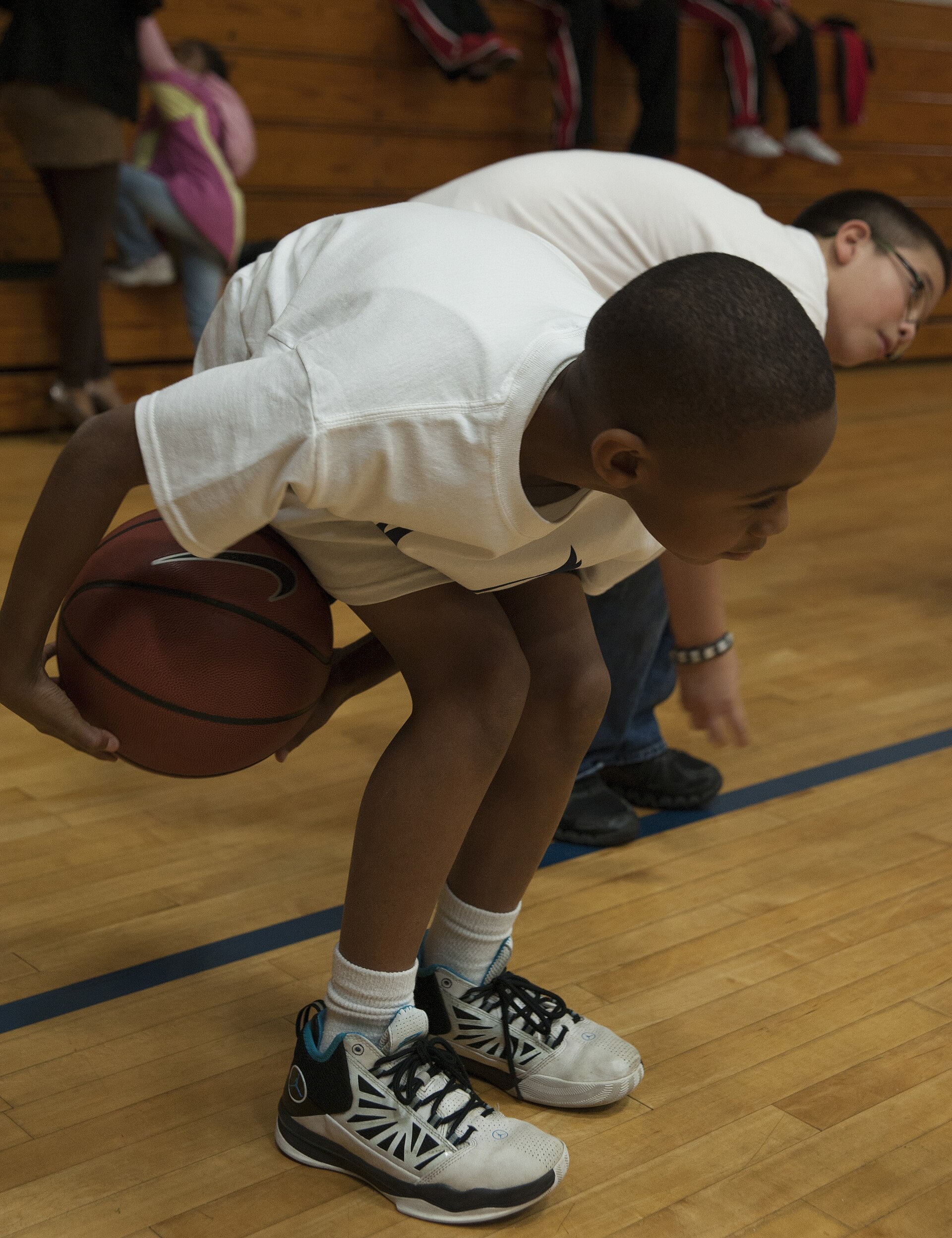

Video: Distracted Dribbling | Jr. NBA Curriculum by Jr. NBA Jr. WNBA
Short Answer
Do not demand eyes up for every bounce. First make the bounce predictable, then ask for one quick look at a target. When that feels comfortable, stretch the look to two or three bounces before the child checks the ball again.
Looking Down Is A Beginner's Tool
A child watches the ball because they are still learning where it will return. That is useful information, not a bad habit that needs a lecture. The next step is to make short looks away from the ball feel safe.
Settle The Dribble First
Start still, with knees soft and the ball beside the hip rather than in front of the toes. Keep the bounce around waist height or lower. If the child has to chase it, looking ahead is too much to ask yet.
Try The Finger-Number Game
Stand a few steps in front of the child and hold up one, two, or three fingers at chest height. After three steady bounces, ask them to glance up, call the number, and look back if they need to. Change the number only after the dribble is settled.
Allow A Quick Ball Check
Good practice does not have to mean staring straight ahead without blinking. Let the child check the ball when it moves out of place, recover the bounce, and look forward again. The useful habit is returning their attention to the space, not pretending the ball has disappeared.
Add Three Slow Steps
Once the number game works while standing, ask for three walking steps. Hold up the number before the last step. If the ball gets away twice in a row, stop moving and rebuild the rhythm.
Turn The Look Into A Decision
Point left or right while the child dribbles slowly. They call the direction, take one controlled step that way, then stop with the ball secure. Looking up now has a reason: it changes what they do next.
Use Distraction Carefully
The Jr. NBA demonstration below shows how a second task can challenge ball control. Keep your version simple. For example, one voice, one visual cue, and plenty of space are enough for a beginner.
Skip The Blindfold
A blindfold removes useful vision and makes a runaway ball harder to recover safely. A target in front of the child teaches the real skill: moving attention between the ball and the court.
Cue Less, Notice More
Calling 'head up' after every bounce usually becomes background noise. Give the task once, then notice the successful glance: 'You saw the number and kept the bounce.' That tells the child exactly what worked.
A Ten-Minute Practice
Use 2 minutes of comfortable stationary dribbling, 2 minutes of finger numbers, 3 minutes of slow walking and looking, 2 minutes of left-or-right calls, and 1 easy minute chosen by the child. Stop sooner if control or patience slips.
When To Make It Harder
Progress when the child can look up for two or three bounces without the ball drifting across their body. Add a little walking speed or a second direction. Do not add both in the same round.
What Progress Looks Like
Look for more frequent glances, fewer panicked grabs, and an earlier view of the space ahead. The child may still check the ball under pressure. That is normal; the aim is better awareness, not a perfectly fixed head position.
Common questions
Should a child never look at the basketball while dribbling?
No. Beginners need to check the ball while control is developing. Practise short looks ahead and let them look back when the bounce needs fixing.
What is the easiest eyes-up basketball dribbling drill?
Use a stationary dribble while an adult holds up finger numbers. The child glances up, calls the number, and keeps the same hand and bounce height.
When should we add walking?
Add three slow steps after the child can make a quick glance while stationary without losing the ball. Return to standing if the ball starts running away.
Training sessions
15-Minute U8 Basketball Dribbling Session
A 15-minute basketball dribbling session for 8-year-olds, with ball-control reps, weak-hand practice, jump stops, coaching cues, and safe at-home setup.
Recommended drills
Pound Dribble Holds
A beginner ball-handling drill that teaches a child to dribble with force while staying balanced.
Left Hand Walk And Bounce
A weak-hand confidence drill where kids walk slowly while keeping the ball alive with the left hand.
Cone Tap Dribble Race
A short dribbling game where kids tap safe markers in order while keeping the ball alive and stopping under control.