
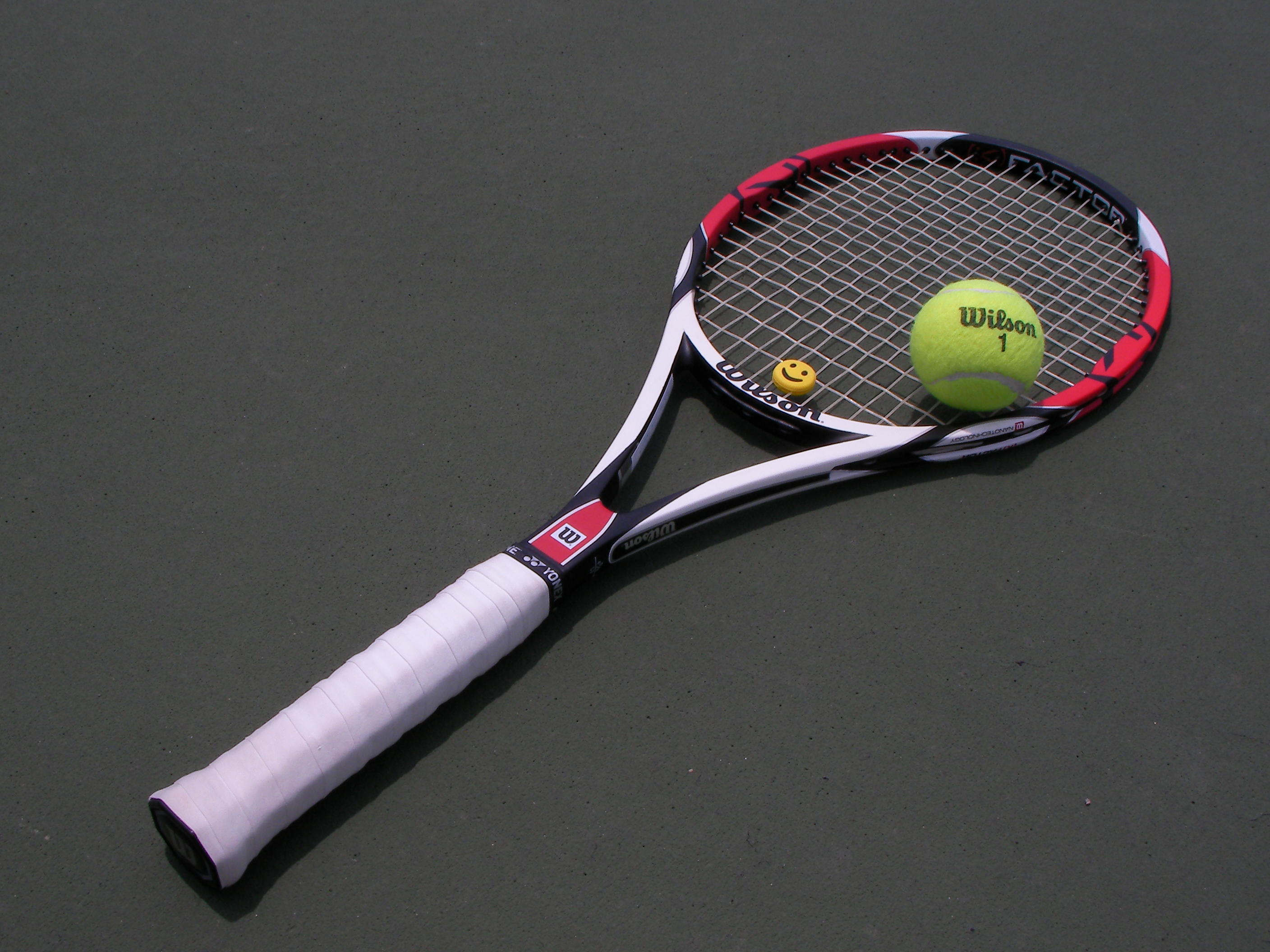

A Court Helps, But It Is Not The First Requirement
Tennis at home without a court works when the task fits the space. A full court gives tennis its normal distances and lines, but it is not where every beginner has to start. Early control can be learned in a clear patch of garden, a quiet driveway, a community space, or indoors with a foam ball and no swing. The useful question is whether the child can balance, move, send, and reset without chasing a ball into danger.
The Smaller Space Changes The Job
Home practice should not pretend that a patio is a baseline. Shorten the action to fit the area. Indoors, keep the racket still and work on balance, rolling, or a single low tap. Outdoors, add a self-drop and a wide floor target only when the missed ball has a safe route. A small space can make the feedback clearer because an overhit ball leaves the marked area immediately.
Careful Supervision Protects Confidence As Well As Property
An adult's first job is to inspect the racket path and the route of a missed ball. Move people, pets, breakables, vehicles, and spare balls before practice begins. The second job is to keep the task emotionally manageable. One calm cue between attempts is enough. If the child is swinging harder after each miss, shorten the distance or return to a no-swing activity instead of turning the garden into a test.
Choose Equipment For Control, Not Status
The LTA describes junior racket sizes as guidance rather than a rule and notes that a smaller racket can help a young starter control the action. Its equipment guide pairs younger stages with slower red, orange, and green balls. The ITF also uses slower balls and adapted spaces for Tennis10s. At home, use the combination the child can hold, stop, and direct safely. Moving to a faster ball is not the purpose of the session.
Run One No-Court Control Routine
Use the first two blocks for a quiet indoor or very small-space version. Add the third block only outdoors in a clear hitting lane. The extended version repeats the block that is helping rather than adding a new skill.
Set up before the first ball
Mark a standing box about two adult paces square. For outdoor hitting, add a wide target gate three adult paces away and leave a clear run-out beyond it. Use one suitable racket and one foam, red, or other slower ball. Keep every spare ball outside the practice area. Check the surface, full racket path, windows, roads, doors, people, pets, and vehicles before the child begins.
Run the routine
Balance, tilt, and stop
Stand with both feet inside the box and hold the racket face level in front. Place the ball on the strings. Tilt the face slightly left, return it to level, then tilt right without letting the ball fall. Finish by holding the ball still for three seconds. Complete five controlled stops before adding a tap. Indoors, this can be the whole racket task.
Keep the racket face in front, make one small tap, then catch. Both feet stay planted while the ball rises below eye height.
Roll, stop, and reset
Put the ball on the floor in front of the box. Use the racket face to roll it across the box, stop it before it leaves, then return both feet to the start mark. Alternate forehand and backhand sides. Count six stops made with a quiet racket. The ball should roll, not jump toward a wall, door, or person.
Roll the ball slowly across the level strings, stop it near the centre, and freeze. The contact circle marks the usable racket-face area; both feet stay balanced.
Drop, bounce, and send through a wide gate
Stand three adult paces from the target. Drop the ball slightly in front on the racket side, let it bounce once, and use a short swing to send it below waist height through the wide gate. Reset inside the box after every attempt. Count five balls that stay inside the safe lane, whether or not they pass between the markers.
Drop the ball in front of the racket side, let it bounce once, and use a short send through the wide gate. The marked circle shows the contact area.
What success looks like
- The child keeps both feet inside the box during the balance task and can stop the ball before starting again.
- The floor roll stays slow enough to stop inside the marked space.
- An outdoor self-feed lands in front of the racket side rather than behind the feet.
- After every attempt, the racket returns in front and the child checks the space before collecting the ball.
Make it easier
Put the racket down and roll the ball between the child's hands, or balance a beanbag on the strings instead of a ball. Widen the standing box and move the outdoor gate closer. Keep the ball on the floor until the child can stop it without chasing.
Make it harder
Change one demand only: make the floor-stop box slightly smaller, add one low tap before the catch, or narrow the outdoor gate. Keep the slower ball and the same safe lane. Do not add speed, a wall rebound, and movement at the same time.
Safety check
Use a foam ball and no swing indoors. Outdoors, practise only on a dry, level surface with a clear racket zone and a safe run-out for missed balls. Never aim toward glass, roads, parked cars, doors, occupied paths, or neighbouring property. Collect the ball only after the racket is still. Stop for pain, distress, slipping, repeated loss of racket control, or any change that makes the space unsafe.
Choose The Version That Fits The Space
| Space | Useful first job | Do not add yet |
|---|---|---|
| Living room or hallway | Ball balance, beanbag balance, or a hand roll with no swing | Bounces, overhead work, or hitting toward a wall |
| Patio or small paved area | Racket roll and stop inside a marked box | A full forehand if the miss can reach glass or traffic |
| Garden or quiet driveway | Self-drop through a wide gate below waist height | Power, long feeds, or several loose balls |
| Safe wall with clear rebound route | One gentle send, one rebound, then catch | Continuous rallying before the return can be read and controlled |
| Park or community hard space | Adult underarm feed to a wide target | Formal court distances before the child can recover safely |
Use A Short, Standard, Or Extended Route
For a short route, run balance and floor stops, then finish while control is still high. The standard route adds the outdoor self-feed when the space is suitable. For an extended route, repeat one block after a short drink break and change only the target or distance. The session ends when the ball path or racket path stops being predictable, not when a clock says the work is done.
What The Adult Should Watch
Look at the child before the target. Can they hold the racket without dragging it? Does the drop land in front? Do both feet stay organised after contact? Can they stop and wait while a ball is collected? Those details decide whether to continue. A missed gate with a calm reset is more useful than a successful shot followed by a wild chase.
When A Wall Is The Wrong Next Step
A wall removes the need for an adult feed, but it sends every hard ball back faster. Skip it when the wall has windows, rough edges, nearby paths, unpredictable angles, or too little room for the child to recover. Use the separate wall-rally progression only when the rebound route is clear. A floor roll or adult catch is a better home option when control is still fragile.
Move To A Court When The Child Needs Court Problems
Home practice can build racket control, a self-feed, a compact send, and the habit of resetting. A court becomes useful when the child is ready to judge longer bounces, move around a net, learn court positions, or rally with more space. The no-court routine is a starting route, not a substitute for qualified coaching or safe access to proper facilities.
Key pages
Tennis
Tennis for kids and beginners works best when the ball is slow enough to control. Use one racket, a small marked space, and this first session before attempting a full-court rally.
Tennis Drills for Kids: A 12-Minute Starter Routine
Use these tennis drills for kids to build racket control, direct a self-fed ball, and recover after a return. The 12-minute routine needs one racket, one slower ball, an adult feeder, and a small marked space.
Tennis Ball Control Drills for Beginners: 10-Minute Plan
These beginner tennis ball control drills teach a child to steady the racket face, make one small tap, and send a self-fed ball toward a wide gate. Run the complete 10-minute routine with one racket and one slower ball.
Drop-Feed Forehand Drill for Kids: Contact in Front
This drop-feed forehand drill for kids gives the player control of the start. They drop a slower ball on the forehand side, meet it in front, send it through a wide gate, and recover before the next repetition.
Beginner Tennis Wall Rally Drill: Build Consistency
This beginner tennis wall rally drill turns the wall into a predictable practice partner. A child starts with one send and catch, adds a return after one bounce, then builds a short cooperative rally without chasing pace.
Beginner Tennis Serve-Toss Drill: Place and Balance
This beginner tennis serve-toss drill helps a child place the ball above head height and slightly in front, hold a balanced starting shape, and reset before adding a gentle serve.
Avery Quinn
Avery Quinn writes practical tennis guidance for families choosing equipment, adapting a small practice area, and keeping early sessions manageable.
Editorial Policy
How DrillsPedia researches, writes, checks, updates, and labels drills, sessions, videos, and parent guidance.
Common questions
Can a child really start tennis without a court?
Yes. The LTA explicitly includes ways to practise tennis at home. Begin with racket and ball control in a marked safe area, then add a low self-fed send only when the missed ball has a safe route.
What tennis ball is best for home practice?
Use the slowest ball that makes the activity controllable. A foam ball is suitable for quiet no-swing work, while red, orange, and green balls provide staged slower options. The child's control and the available space matter more than rushing to a yellow ball.
Can children practise tennis indoors?
Keep indoor work to no-swing activities such as balancing a ball or beanbag, gentle hand rolls, and footwork around flat markers. Do not bounce or hit when ceilings, glass, furniture, people, or pets can enter the racket or ball path.
How much space is needed for tennis practice at home?
The balance and floor-roll blocks fit inside a two-pace marked box. A self-fed hit needs a wider outdoor lane with room beyond the target for a miss. If that run-out reaches property, traffic, or another person, do not hit.
When should a beginner move from home practice to a court?
Use a court when the child needs longer movement, a net, court positions, or a partner rally. Home practice is doing its job when the child can control one ball, make a compact send, and reset safely before the next attempt.