
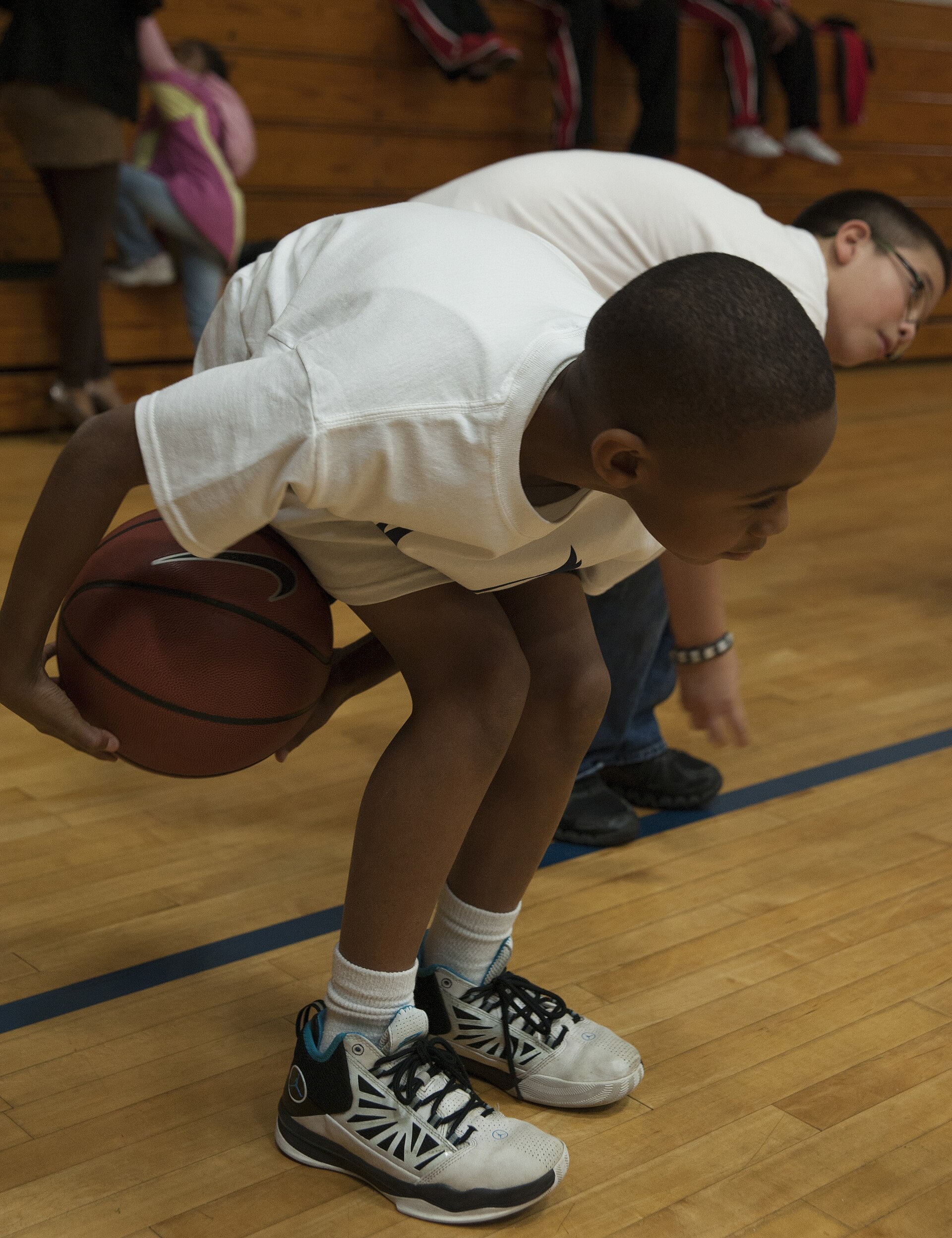

What This Page Is For
Use this page when a child wants to practise basketball alone and you need a clean session, not a pile of drill names. The focus is control: a steady bounce, a safe stop, better weak-hand touches, pivots that stay legal, and shooting shape when there is no hoop. Team passing and defensive reads still need people later.
Start With The Space, Not The Drill
Before choosing a drill, check where a loose ball will go. A driveway or outdoor hard floor can handle walking dribbles. A small indoor space is better for ball wraps, pivots, and form reps. If a missed bounce can reach stairs, glass, a road, a parked car, or someone walking through the room, switch to a no-bounce drill.
A 12-Minute Solo Basketball Routine
Use two minutes of Pound Dribble Holds, two minutes of Figure-Eight Ball Wraps, two minutes of Left Hand Walk And Bounce, two minutes of Pivot Clock, two minutes of either Cone Tap Dribble Race or No-Hoop Shooting Form Reps, and two minutes for an easy finish. The finish can be five calm bounces, one freeze, and one drill the child already likes.
When To Use Each Drill
Use Pound Dribble Holds when the ball bounces too high or escapes in place. Use Figure-Eight Ball Wraps when the room is tight or the child needs hand confidence without bouncing. Use Left Hand Walk And Bounce when the stronger hand is comfortable but the weaker hand disappears. Use Pivot Clock when the feet shuffle after a stop. Use No-Hoop Shooting Form Reps when there is no basket but the child still wants shooting work.
What To Count
Count small things the child can feel: ten waist-high bounces, five wraps without a drop, three slow weak-hand steps, one pivot without moving the anchor foot, or one held shooting finish. Solo practice works better when the target is visible. Avoid vague targets like better handles or more effort.
Make It Easier Without Changing The Skill
Shorten the lane, lower the bounce count, widen the stance, allow a two-hand freeze after every few bounces, or move from walking to standing. Keep the same skill in the easier version. If weak-hand work becomes messy, make the weak-hand task smaller instead of replacing it with a strong-hand game.
When To Make It Harder
Change one detail at a time. Add two walking steps, ask for one quick look ahead, switch hands, narrow the target area, or add a stop after the dribble. Do not add speed, weak hand, eyes-up, and a smaller space in the same round. Two loose balls in a row usually means the drill jumped ahead too fast.
What To Avoid
Avoid blindfold dribbling, fast crossovers near furniture, full-speed races in tight rooms, hard bounces under low ceilings, and long no-hoop shots that turn into throws. Those can look intense, but they often teach chasing, leaning, or unsafe movement.
Safety Setup
Use a dry, level surface with room for the ball to roll safely. Clear bags, toys, water bottles, glass, pets, and people walking through the area. If the ball can run into a dangerous place, rotate the child, shorten the lane, or choose Figure-Eight Ball Wraps and Pivot Clock instead.
Which Solo Basketball Drill Should You Start With?
| What you see | Start with | Keep it manageable |
|---|---|---|
| The ball runs away while standing | Pound Dribble Holds | Use waist-high bounces and a two-hand freeze after five touches. |
| The space is tiny or indoors | Figure-Eight Ball Wraps | Remove the bounce and ask for clean hand-to-hand control. |
| The weaker hand is avoided | Left Hand Walk And Bounce | Start with three slow steps and a freeze, not a race. |
| The feet shuffle after stopping | Pivot Clock | Pick one pivot foot and make one legal turn at a time. |
| Practice feels flat | Cone Tap Dribble Race | Score controlled stops and touches, not raw speed. |
| There is no hoop | No-Hoop Shooting Form Reps | Hold the finish and reset the feet before the next rep. |
Visual Drill Guide
Use these setup sketches before choosing a drill. The feet show the starting shape; the arrows show where the ball or body moves next.
0-1 minute: set the feet, bend the knees, and make three test bounces beside each hip.
Stand with feet wider than the shoulders.
Minutes 0-1: stand at the start marker with knees softly bent. Make five left-hand bounces beside the left shoe, catch the ball with two hands, and repeat three calm times.
Start with the ball held securely.
Common questions
What basketball drill can kids do alone first?
Start with Pound Dribble Holds if there is a safe bounce surface. If space is tight or indoors, start with Figure-Eight Ball Wraps because the child can build control without chasing a loose ball.
Can kids practise basketball alone indoors?
Yes, but choose the drill for the room. Ball wraps, pivots, and slow form reps are usually safer indoors than hard dribbling or speed races.
How long should solo basketball practice last?
Ten to twelve focused minutes is enough for many young beginners. Stop sooner if control, safety, or patience disappears.
What if there is no hoop?
Use ball handling, footwork, pivot work, and no-hoop shooting-form reps. Be clear that real shooting touch still needs a basket later.
Recommended drills
Pound Dribble Drill For Kids: 8-Minute Control Routine
A pound dribble drill for kids that builds a firm, repeatable bounce, a balanced freeze, and control with both hands in eight clear minutes at home or on court.
Figure-Eight Ball Wraps
A no-dribble ball-handling drill that helps kids move the ball around the legs while staying balanced.
Left Hand Dribbling Drill for Kids: 8-Minute Walk and Bounce
This left hand dribbling drill for kids moves from a stationary bounce to a slow walk, an eyes-up check, and a balanced stop. The eight-minute routine gives parents a clear starting point without asking a beginner to race.
Pivot Clock
A beginner footwork drill where the child lands, freezes, and pivots to different clock positions before passing or protecting the ball.
Cone Tap Dribble Race
A short dribbling game where kids tap safe markers in order while keeping the ball alive and stopping under control.
No-Hoop Basketball Shooting Form Drill For Kids: 8 Minutes
An eight-minute no-hoop basketball shooting form drill for kids to rehearse stance, shot pocket, arm path, and follow-through without an indoor release.