
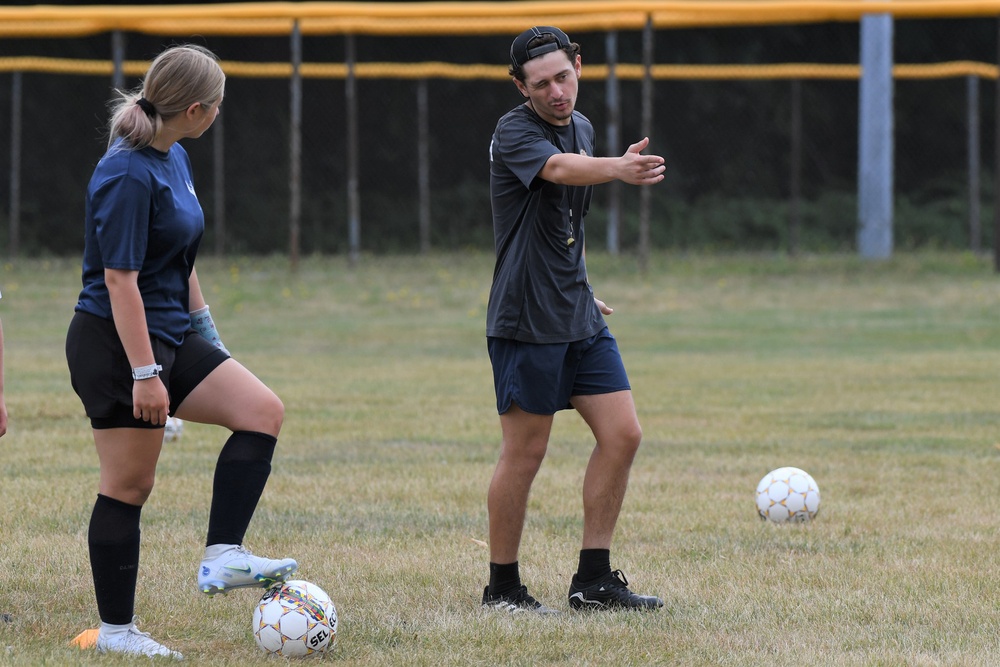
What A Decision-Making Drill Must Include
A decision needs information and at least two sensible actions. The player might see an open gate, pressure arriving from one side, or a teammate moving into space. If every repetition ends with the same turn or pass, the activity is a technique pattern, not decision practice.
Set Up The 12-Minute Session
Mark a receiving spot with two exit gates about three metres to either side. A parent or coach stands four to five metres in front with one ball. Leave two metres beyond each gate so the child can take a first touch without reaching a road, wall, another group, or hard obstacle. Add a third player behind the receiver only for the final block.
Minutes 0-3: Look Before The Pass
Use two wide gates. Before feeding the ball, hold up or point toward one gate. The receiver checks over both shoulders, receives side-on, and takes the first touch through the indicated gate. Call the information early enough for the player to succeed. Six calm repetitions are more useful than a fast queue of touches.
Minutes 3-6: Read The Ball And Gate
Keep the same two gates, but point after the pass starts moving. The receiver looks away from the ball briefly, finds the open gate, then returns their eyes to the pass. Slow the feed if the child cannot see both the signal and the ball. Do not turn this into a test of colour names; the football action is seeing space and shaping the first touch toward it.
Minutes 6-9: Turn Or Return
The adult passes, then steps gently toward one exit gate. If the far gate remains open, the child turns through it. If both routes feel closed or the touch is untidy, the child protects the ball and passes back. A safe return pass counts as a good choice; turning is not automatically better.
Minutes 9-12: Add Light Pressure
With three players, place a passive defender a step behind the receiver. The defender moves to one shoulder as the pass travels. The receiver scans, opens toward the free side, and either turns or sets the ball back. With only two people, the feeder can point to the closed gate instead. Keep contact out of this block until the receiver can find the pressure without losing sight of the ball.
Use One Cue Before The Ball Arrives
Say check your shoulder, see both gates, or open away from pressure. Pick one cue for a short set. Once the pass is moving, let the player solve the picture. A stream of instructions can make the adult the decision-maker instead of the child.
Reset The Picture Between Repetitions
Return the ball and both players to the same starting marks before changing the signal. This makes the new gate or pressure cue the meaningful change. If the receiver starts creeping toward one side, pause and reset rather than feeding a pass into a different exercise.
Watch The Choice Before The Outcome
A well-read pass can still be slightly misplaced, and a poor choice can occasionally work. First check whether the player looked, recognised the open route, and shaped the body for that route. Then help with the touch or pass. This separates the decision from the execution without pretending technique does not matter.
Make The Practice Easier Or Harder
To make it easier, widen the gates, point earlier, roll the ball, or remove the defender. To make it harder, point later, narrow the space slightly, change the passing angle, or let a passive defender approach from either shoulder. Change one variable at a time; if scanning disappears, restore the previous version.
Safety And Stop Check
Use a flat surface and soft, ground-level passes. Keep gates clear of walls, traffic, goals, other drills, and loose equipment. Stop the set when the receiver turns without looking, chases passes beyond the marked area, or braces for contact. Reduce the pass speed or remove pressure before restarting.
Which Decision-Making Drill Should You Start With?
| Problem you see | Start with | Keep it manageable |
|---|---|---|
| The player only looks after receiving | Scan Before Receive Gates | Use two gates and point before the pass |
| The first touch always goes straight back | First Touch Colour Call | Call early and keep both exit gates wide |
| The player turns into pressure | Receive, Turn, And Play Out | Make the defender passive and reward a safe return |
| The player sees the option but receives square | Receive Across The Body | Feed slowly toward the front foot |
| The choice is calm but too predictable | Midfielder Scan, Pass, And Turn | Add one changing target, not several rules |
Three Pictures To Set Up First
Use these views before starting. Both feet are shown so the receiving stance and exit direction are clear; the arrows show the information the player must act on.
The receiver checks both shoulders before the pass and opens toward the free gate. Start with the signal early.
Point to one gate as the ball travels. The first touch should leave through that gate, not stop underneath the feet.
The defender closes one side lightly. Turn through the open side or protect the ball and return it to the feeder.
Key pages
Scan Before Receive Gates
A receiving drill that makes players look before the ball arrives and choose a safe first-touch direction.
First Touch Colour Call
The feeder calls a colour while the ball is travelling, and the receiver takes the first touch toward that gate.
Receive, Turn, And Play Out
The receiver has two good choices: turn when the far side is open, or play back when the pressure closes it.
Receive Across The Body
A receiving drill that teaches players to take the ball away from pressure and into the next action.
Football Passing Drills For Kids: 12-Minute Routine
Football passing drills for kids, with a 12-minute routine, clear setups, technique checks, and easier options for home or team practice.
Common questions
How do you improve decision-making in football?
Give the player a small amount of changing information and two useful actions. Let them scan before receiving, choose, and then review what they saw before correcting the technique.
What is the easiest football scanning drill for kids?
Start with two wide receiving gates and one feeder. Point to a gate before the pass, then ask the child to check a shoulder and take the first touch through that gate.
Should a coach tell the player which decision to make?
Explain the options before the set, but avoid directing every live repetition. Use a gate, defender, or movement as the information and let the player choose from what they see.
Can football decision-making drills work with two people?
Yes. One adult can feed the ball and point to an open or closed gate. A third player is useful for passive pressure, but it is not required for the first two blocks.
Recommended drills
Scan Before Receive Gates
A receiving drill that makes players look before the ball arrives and choose a safe first-touch direction.
First Touch Colour Call
The feeder calls a colour while the ball is travelling, and the receiver takes the first touch toward that gate.
Receive, Turn, And Play Out
The receiver has two good choices: turn when the far side is open, or play back when the pressure closes it.
Midfielder Scan, Pass, And Turn
A three-player passing drill for scanning before receiving, opening the body, and turning into the next pass.
Goalkeeper Distribution Gates
A goalkeeper distribution drill for choosing a safe target and starting the next attack with the feet or hands.
Triangle Pass And Follow
A simple three-player passing pattern that teaches players to pass, move, and open a new angle.